 Art
Art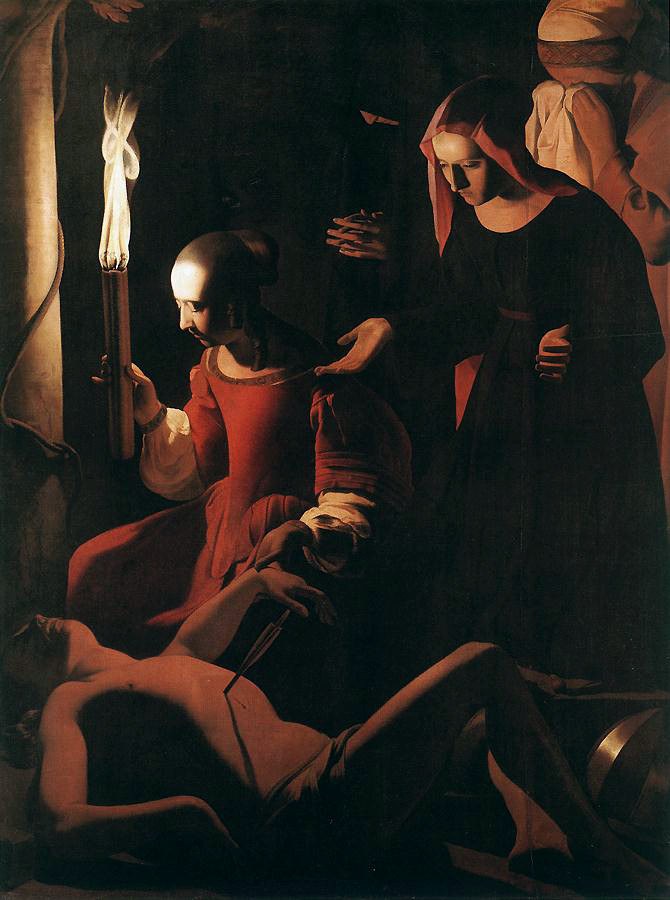
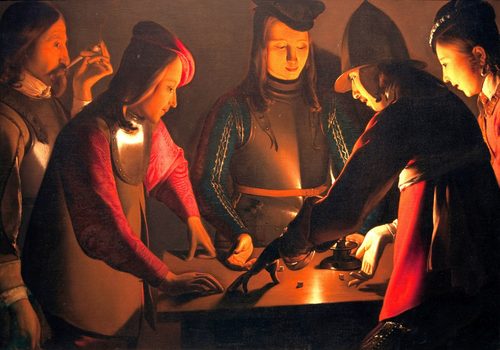
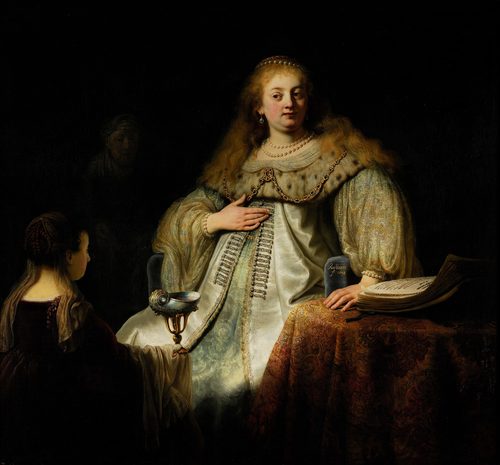
Chiaroscuro—Italian for 'light-dark'—is a painting technique that uses strong, controlled contrast between illuminated and shadowed areas to give flat, painted forms a convincing sense of volume and depth. Rather than lighting a scene evenly, the artist directs a single, often dramatic light source across the composition, letting large areas fall into deep shadow while a few key surfaces catch bright, focused light.
The effect does double duty: it sculpts individual forms, making a face or a draped sleeve read as fully three-dimensional the way raking light reveals form on a real object, and it directs the viewer's eye, since the brightest area in a composition naturally draws attention first. Artists reach for chiaroscuro when they want a scene to feel weighty, dramatic, or emotionally charged rather than flat and evenly lit. It became one of the defining tools of Renaissance and Baroque painting, and its logic still underpins how painters, illustrators, and cinematographers light a scene for maximum impact today.
How to spot it
- 01A single strong light source with everything else falling into shadow
- 02Faces or objects that look sculptural, almost carved by light
- 03Deep, near-black shadow areas with almost no visible detail
- 04A bright highlight that pulls the eye straight to the focal point
- 05Smooth gradations between the lit and shadowed sides of a form
The Chiaroscuro workshop card
A few sessions to grasp the value logicMaterials
- oil or acrylic paint in a limited value range
- a single directional light source for reference or life setup
- toned or dark-primed canvas to start from mid-value
- range of dark browns and blacks for shadow mixing
- soft and stiff brushes for blending transitions
- reference photos or a life model lit from one side
Steps
- 1
Choose one dominant light direction
Decide where the light comes from before anything else, and commit to it for the entire composition. Every shadow in the painting should be consistent with that single source.
- 2
Establish a dark ground
Start on a mid-toned or darkened canvas rather than bare white, since it's easier to push highlights forward from a dark base than to pull an entire scene down into shadow.
- 3
Map the shadow shapes first
Block in the large dark masses as simplified shapes before worrying about detail. Chiaroscuro depends on big, confident value shapes rather than fussy small-scale shading, so keep the initial blocking loose and bold.
- 4
Reserve your brightest highlight
Hold back your lightest, most saturated highlight for the single area you most want the eye to land on. Spending it too early on a secondary element weakens the whole composition's focus.
- 5
Build gradual transitions
Blend the edge between lit and shadowed planes smoothly on rounded forms, but keep the transition abrupt and hard-edged where a form's own shadow falls onto another surface.
- 6
Keep shadow areas simple
Resist the urge to add detail into the darkest passages. Understated, near-featureless shadow reads as more convincing and dramatic than shadow crowded with visible information.
- 7
Check the value structure in grayscale
Squint at the painting, or view a photo of it in black and white, to confirm the light-dark pattern still reads clearly once color is set aside.
Classic mistakes
Lighting from multiple directions
Mixing light cues from more than one source flattens the drama and confuses the form. Commit to a single light direction and enforce it everywhere.
Overdetailing the shadow areas
Filling the dark areas with too much visible texture and color competes with the highlights for attention and undercuts the graphic power of the contrast.
Letting midtones dominate
A painting crowded with medium values loses the punch that makes chiaroscuro work. Push the value range toward genuine extremes, not a safe middle ground.
Where it comes from
Chiaroscuro developed as painters moved beyond the flatter, more evenly lit compositions of medieval and early Renaissance art, using directional light to give figures real sculptural weight. Leonardo da Vinci and other High Renaissance painters explored it as a way to model form convincingly in the late 1400s and early 1500s. The technique reached its most theatrical extreme in the Baroque period of the 1600s, when painters pushed the light-dark contrast to near-total darkness punctuated by shafts of brilliant light, a heightened variant later distinguished as tenebrism. Caravaggio's dramatic use of the effect made it central to Baroque painting across Europe, and Rembrandt carried its emotional, psychological use into portraiture. The term and the underlying logic remain standard vocabulary in painting and film lighting today.
See it done perfectly
| Work | Maker | Date | What to look at |
|---|---|---|---|
| The Last Supper | Leonardo da Vinci | 1495–1498 | Directional light models each figure's form and draws focus toward the center of the composition. |
| The Calling of Saint Matthew | Caravaggio | 1599–1600 | A shaft of light cuts across a dark room, sculpting the figures out of near-total shadow. |
| The Night Watch | Rembrandt | 1642 | Warm, theatrical light picks key figures out of a crowded, shadowed composition. |
| The Penitent Magdalene | Georges de La Tour | c. 1640 | A single candle flame as the sole light source, throwing the entire scene into warm, dramatic chiaroscuro. |
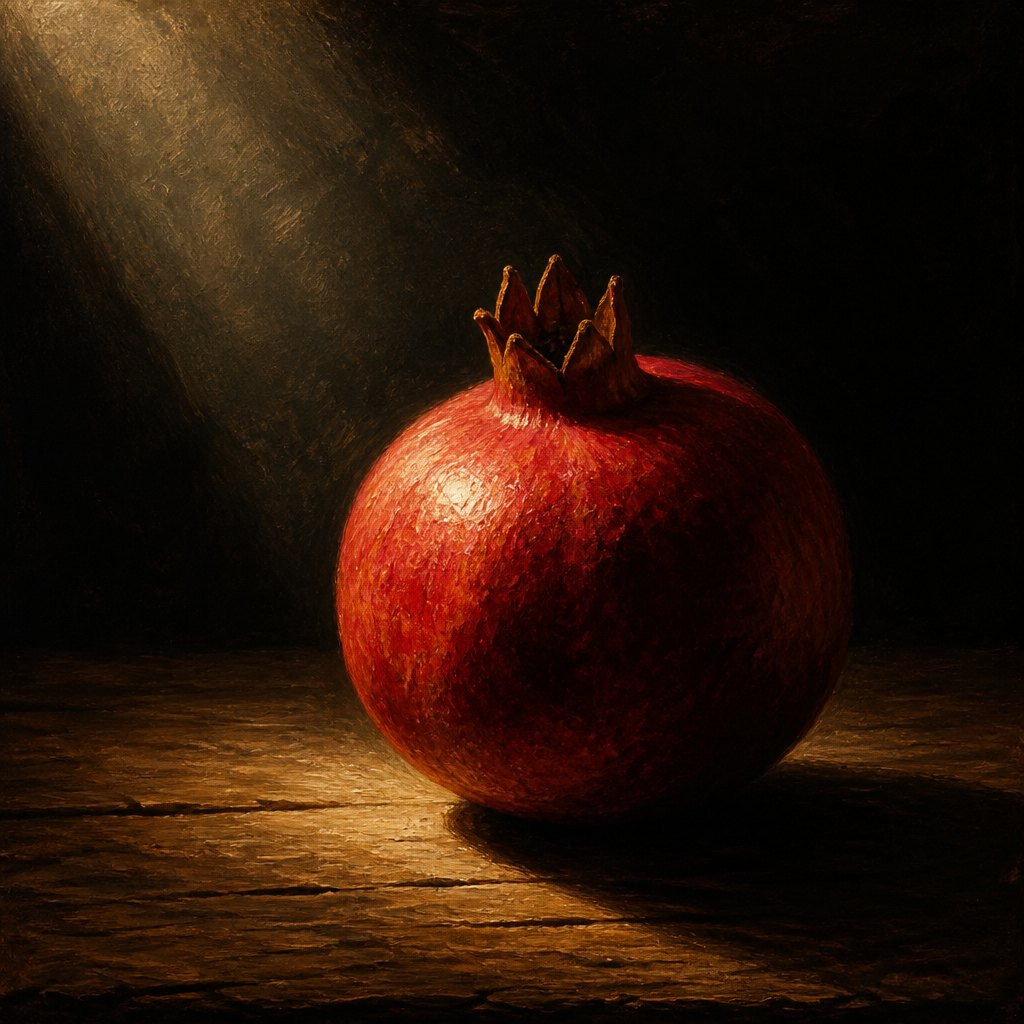 AI-generated
Try it with AI
Get the Chiaroscuro look in a generator
To push an AI generator toward chiaroscuro, describe the lighting directly: 'dramatic single-source lighting,' 'strong chiaroscuro,' 'deep shadow with a bright focal highlight,' or 'directional raking light.' Terms like 'high contrast,' 'sculptural lighting,' and 'dark background with a spotlit subject' reinforce the effect. Specifying 'candlelight' or 'a single shaft of light' can add warmth and drama. Avoid 'evenly lit' or 'soft diffused light,' which pull the image toward flat, shadowless lighting that works against the whole point of chiaroscuro.
Frequently asked questions
What is chiaroscuro?
Chiaroscuro is a painting technique that uses strong contrast between light and shadow to give flat forms a sculptural, three-dimensional feel and to direct the viewer's attention toward the brightest area of a composition.
What's the difference between chiaroscuro and tenebrism?
Tenebrism is an extreme version of chiaroscuro, pushing shadow to near-total darkness with only small, brilliant pockets of light, while chiaroscuro covers a broader range of light-dark contrast.
Can chiaroscuro be done in any medium?
Yes—it's a lighting principle more than a material technique, so it works in oil, acrylic, charcoal, photography, or digital painting, as long as you commit to strong, directional light.
Do I need special paint to achieve chiaroscuro?
No special paint is needed—any medium with a full value range works. What matters is starting from a dark or mid-toned ground and controlling where the light falls.