 Art
Art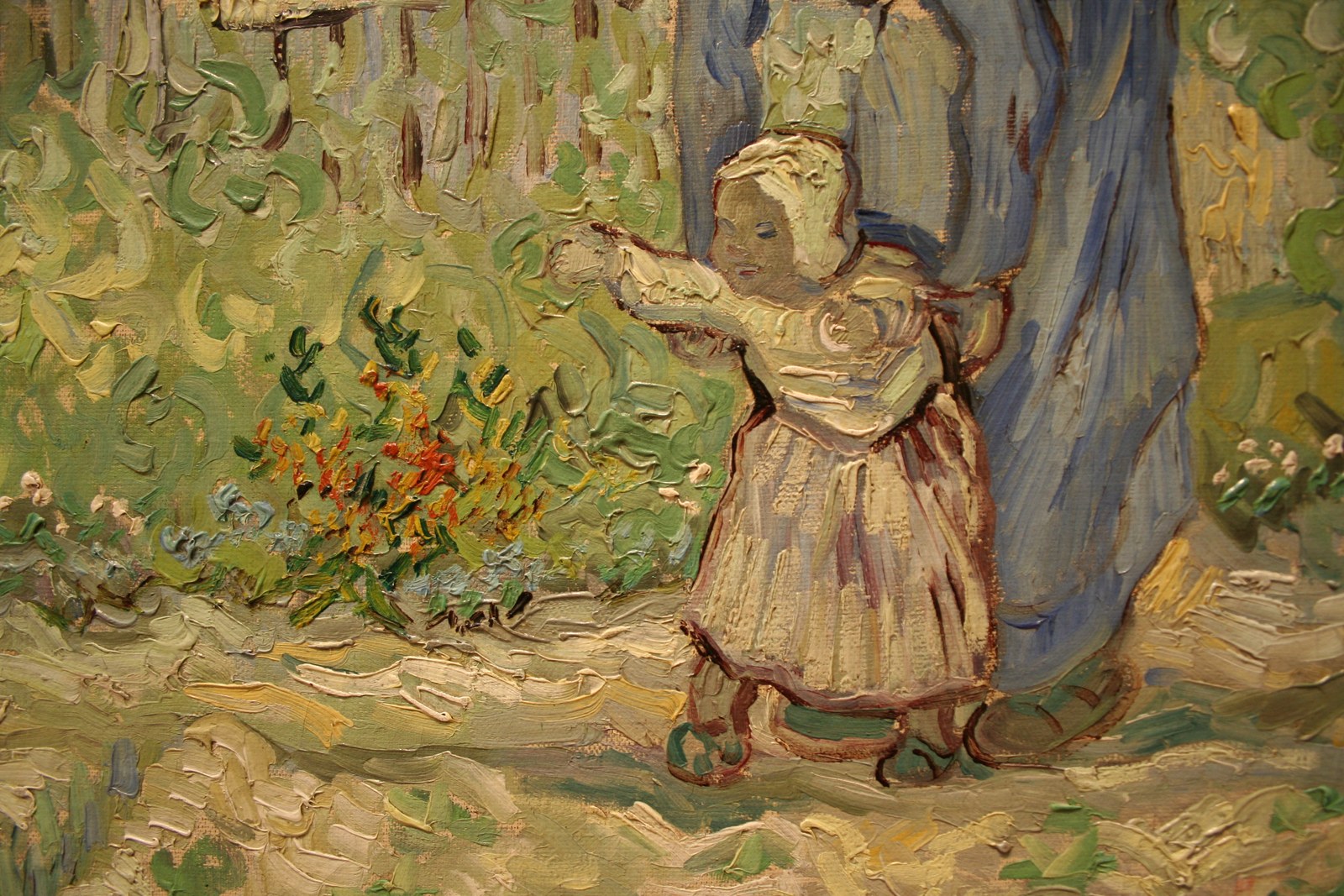
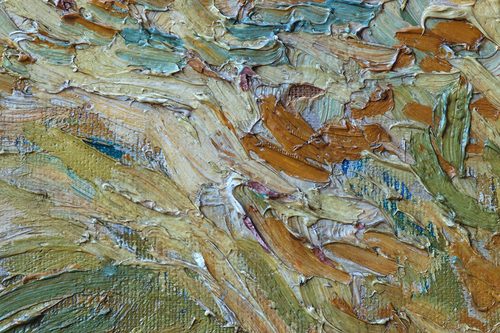
Impasto is a painting technique in which paint is applied thickly enough to stand up off the surface in ridges and peaks, holding the visible mark of a brush or palette knife rather than lying flat. Because the paint has real physical height, actual studio or gallery light rakes across its texture and casts tiny shadows, adding a dimension of literal, tactile relief that no flat brushstroke can produce.
Artists reach for impasto when a passage needs energy, weight, or urgency—a sky churning with movement, a highlight that needs to visually jump off the canvas, a surface that should feel built rather than merely depicted. It works especially well with oil paint, which holds its shape as it dries slowly, though heavy-body acrylics can achieve similar texture. Because the technique uses so much paint, it's often reserved for focal passages within an otherwise thinner painting, letting the contrast between smooth and thick paint do additional expressive work.
How to spot it
- 01Visible ridges and peaks of paint standing up off the canvas
- 02Brush or palette-knife marks preserved in the dried paint's texture
- 03Tiny real shadows cast by the paint's own thickness under gallery light
- 04A surface that looks sculptural or three-dimensional up close
- 05Thick highlights that seem to catch more light than the rest of the painting
The Impasto workshop card
Quick to try, slow to dry and finishMaterials
- oil paint, ideally a stiffer, less oily formulation
- heavy-body acrylic as an alternative to oil
- palette knives in a range of shapes
- stiff hog-bristle brushes
- sturdy canvas or panel that can support thick paint
- painting medium formulated to bulk up paint without weakening it
Steps
- 1
Choose a stiff paint formulation
Use paint straight from the tube or a heavy-body formula rather than one thinned with oil or water, since thin paint can't hold a peak or ridge.
- 2
Plan where thick paint will go
Decide in advance which passages deserve the heaviest texture—usually highlights or focal details—since impasto reads as a deliberate accent, not something to apply uniformly across a whole canvas.
- 3
Load the tool generously
Pick up more paint than feels natural and apply it in a single confident stroke or press, since building thickness through many thin passes tends to flatten the texture rather than preserve it.
- 4
Use a palette knife
Press and drag paint with the flat or edge of a knife to create crisp peaks and troughs that catch light dramatically, an effect a brush alone struggles to produce.
- 5
Let strokes stand without overworking
Resist the urge to smooth a thick mark back down once it's placed, since reworking it usually collapses the texture that makes impasto effective in the first place.
- 6
Allow extra drying time
Give thickly applied paint far longer to dry than a thin layer would need, since oil paint cures from the outside in and a thick ridge can stay soft underneath for a long time.
- 7
Balance thick against thin passages
Keep some areas of the painting comparatively flat and thin so the impasto passages have contrast to stand out against, rather than competing with texture everywhere.
Classic mistakes
Thinning the paint too much
Adding oil, medium, or water to make paint easier to apply also makes it too soft to hold a peak, defeating the purpose of impasto entirely.
Applying impasto everywhere
Covering an entire canvas in thick paint removes the contrast that makes textured passages feel special and can make a painting feel visually exhausting rather than energetic.
Reworking a stroke after placing it
Going back over a thick mark to 'fix' it usually flattens the ridge and muddies the color underneath. Commit to the stroke and move on.
Ignoring extended drying time
Varnishing or packing a painting with thick impasto passages before they've fully cured beneath the surface can damage the texture or trap uncured paint.
Where it comes from
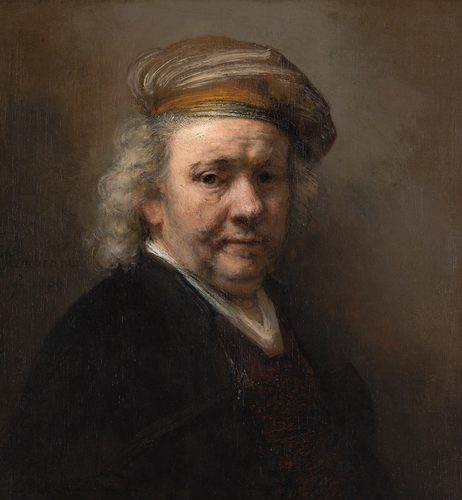
Thick paint application appears throughout painting history, but impasto became a deliberate, expressive tool in the 1600s, when painters like Rembrandt used it for glowing highlights on jewelry, fabric, and skin against otherwise smoother passages. The technique gained new intensity in the nineteenth century, as Impressionist and Post-Impressionist painters embraced visible, energetic brushwork as part of the image itself rather than something to be smoothed away—Vincent van Gogh became especially associated with dense, directional impasto strokes that convey movement and emotion. The technique pushed further in the twentieth century, when Abstract Expressionist painters sometimes applied paint straight from the tube or built up surfaces with a palette knife until the paint's physical presence became as important as the image it formed.
See it done perfectly
| Work | Maker | Date | What to look at |
|---|---|---|---|
| The Starry Night | Vincent van Gogh | 1889 | Thick, directional strokes swirl across the sky, giving the paint itself a sense of motion. |
| Self-Portrait with Two Circles | Rembrandt | c. 1665–1669 | Thick dabs of pale paint catch real light on the face and collar against darker, thinner surroundings. |
| Benefits Supervisor Sleeping | Lucian Freud | 1995 | Extremely thick, built-up paint gives the surface a heavy, sculptural presence. |
| Woman I | Willem de Kooning | 1950–1952 | Aggressive, thickly layered paint application typical of the artist's Abstract Expressionist surface handling. |
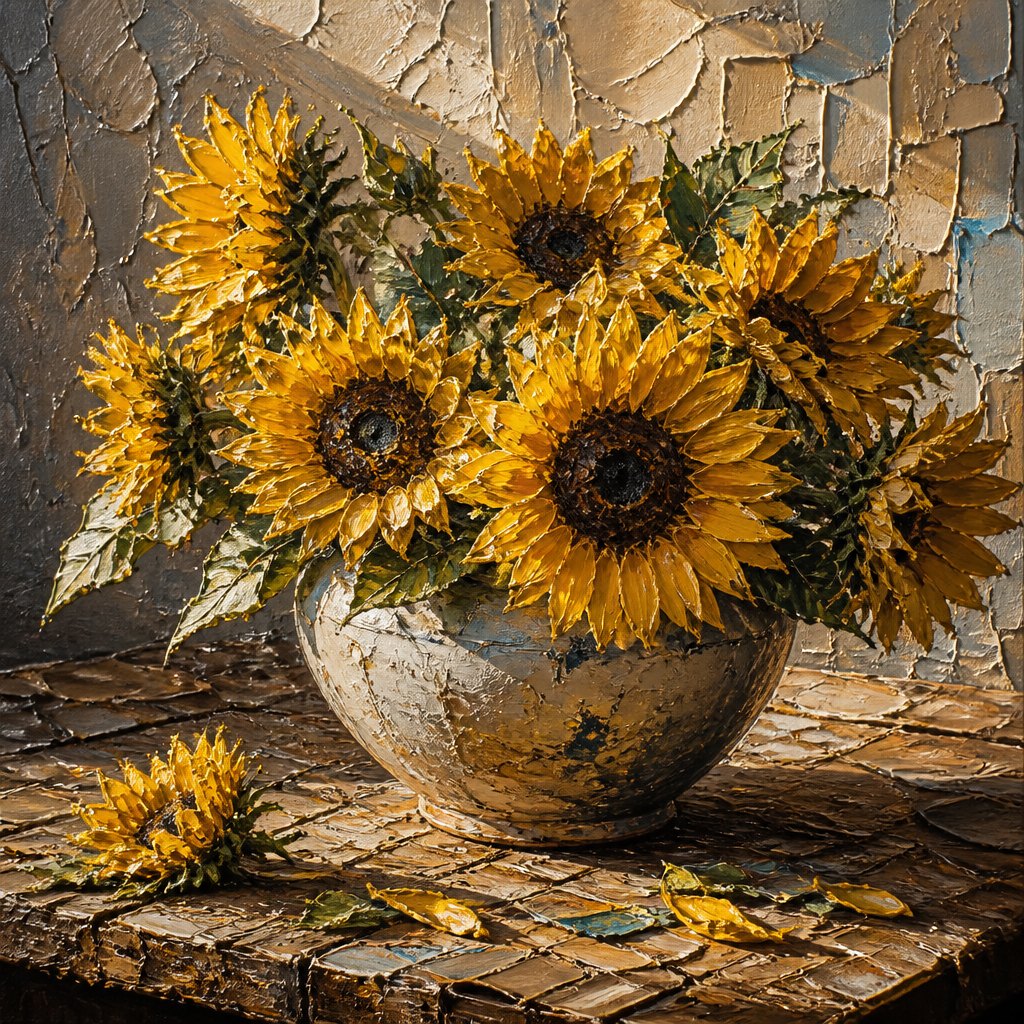 AI-generated
Try it with AI
Get the Impasto look in a generator
To evoke impasto, describe the paint's physical presence: 'thick, textured paint,' 'visible palette-knife marks,' 'paint standing off the canvas,' or 'heavy impasto texture.' Terms like 'raking light on textured paint' and 'sculptural brushwork' emphasize the real shadows thick paint casts. Pairing this with 'oil painting' or 'built-up paint surface' reinforces the physical, three-dimensional quality. Avoid 'smooth' or 'flat finish,' which push a generator toward the opposite, glassy surface that impasto specifically works against.
Frequently asked questions
What is impasto?
Impasto is a painting technique in which paint is applied thickly enough to stand up off the canvas in visible ridges, holding brush or knife marks and catching real light and shadow.
Can impasto be done with acrylic paint?
Yes—heavy-body acrylics hold texture well and dry faster than oil, though oil paint's slow drying gives more time to shape thick marks before they set.
Why does impasto paint take so long to dry?
Thick ridges of paint dry from the outside in, so a passage that feels dry to the touch on the surface can stay soft underneath for weeks or longer.
Do I need a palette knife for impasto?
Not necessarily—a stiff bristle brush loaded generously with paint can create real texture too, though a palette knife makes sharper, more dramatic ridges and edges.