 Art
Art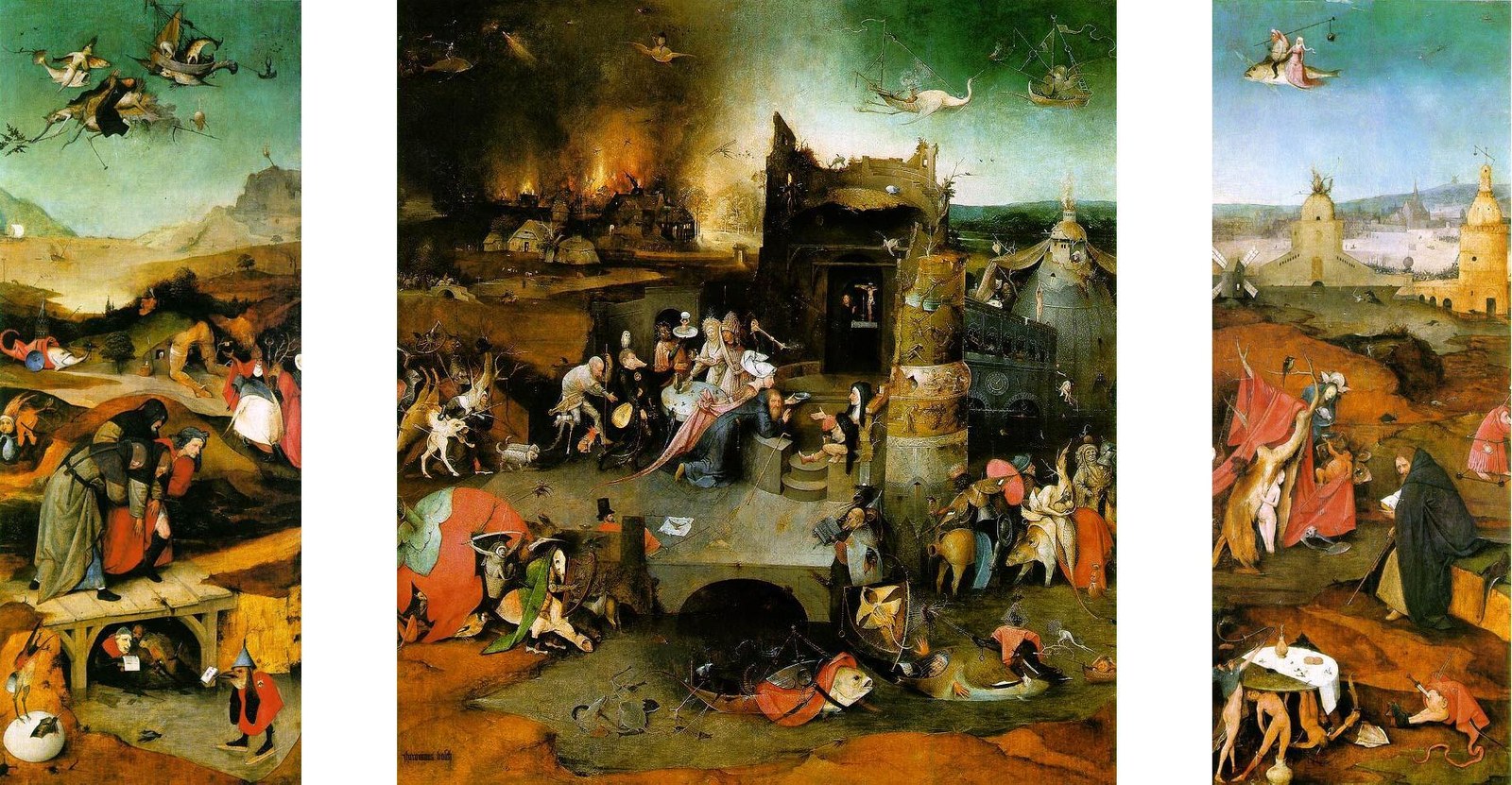
Oil painting is a technique that binds pigment in slow-drying oil, most often linseed, giving artists an unusually long working window to blend, layer, and revise before the paint sets. Unlike water-based media, which dry in minutes, oil paint can stay workable for hours or even days, letting colors be pushed and pulled into smooth transitions directly on the canvas rather than mixed only on the palette.
That slow drying time is the whole reason artists reach for it: it supports soft blending for skin and sky alike, allows a painting to be built up in layers over weeks, and lets mistakes be scraped back and repainted rather than abandoned. Oil can be applied thin and translucent as a glaze or thick and textured as impasto, giving it an enormous tonal and textural range within a single medium. That flexibility made it the dominant painting medium in the West for roughly five centuries, and it remains the standard against which other paints are measured.
How to spot it
- 01Smooth, seamless blending between light and shadow with no visible transitions
- 02A faint sheen or gloss where paint has dried on the surface
- 03Visible brushstrokes holding their shape, sometimes thickly built up
- 04Rich, saturated color that looks slightly luminous rather than flat
- 05Fine surface cracking, or craquelure, on older paintings
The Oil Painting workshop card
Days per session, weeks to finish a paintingMaterials
- oil paint in a range of pigments
- linseed oil or other drying-oil medium
- odorless mineral spirits or solvent for thinning and cleanup
- hog-bristle and soft synthetic brushes
- primed canvas or wood panel
- palette knife for mixing and application
- wooden palette
- varnish for finishing a fully dried painting
Steps
- 1
Prepare a primed surface
Work on canvas or panel sealed with gesso so the oil doesn't soak directly into raw fabric or wood, which would starve the paint of binder and cause it to fail over time.
- 2
Block in the composition thin
Start with a diluted underpainting to establish major shapes and values, using the old studio rule of fat over lean—each layer should carry more oil than the one beneath it.
- 3
Work from dark to light
Establish shadow masses first, then build toward the lightest highlights, since it's easier to add light paint over dark than to darken a passage that's already too light.
- 4
Mix on palette, blend on canvas
Premix your major colors before starting a passage, then use the wet paint's open time to soften transitions directly on the surface with a clean, dry brush.
- 5
Let each layer set before glazing
If building up in layers, let the paint reach a tacky, touch-dry stage before adding thin glazes on top, so the layers don't churn into mud.
- 6
Scrape back mistakes, don't fight them
Use a palette knife to lift off a passage that isn't working while the paint is still wet, giving you a clean slate instead of piling frustrated brushstrokes on top of each other.
- 7
Ventilate while using solvents
Work with good airflow or a respirator when using mineral spirits for thinning or cleanup, since prolonged exposure to solvent fumes in an unventilated room is a real health hazard, not just an unpleasant smell.
Classic mistakes
Painting lean over fat
Putting a thin, fast-drying layer over a thick, oily one causes the top layer to crack as the layers dry at different rates. Always keep each successive layer oilier than the last.
Overusing solvent in every layer
Diluting paint with too much solvent and not enough oil weakens the paint film's structure over time. Use solvent mainly for the initial thin layers, not for the final ones.
Muddying colors by overblending
Endlessly stirring wet paint together on the canvas kills its intensity and turns every mixture toward gray-brown. Blend just enough to soften an edge, then stop.
Rushing to varnish too soon
Oil paint can take months to fully cure beneath the surface even when it feels dry to the touch. Varnishing too soon can trap moisture and cause a cloudy finish.
Where it comes from
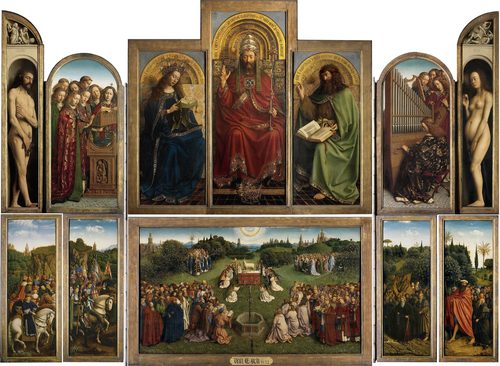
Oil painting developed gradually in Northern Europe, with early Netherlandish painters like Jan van Eyck perfecting layered oil techniques in the early 1400s that let colors glow with unprecedented depth and detail. The medium spread to Italy over the following century and became the standard for panel and canvas painting across Europe by the 1500s, prized for its slow drying time and rich color. It dominated Western painting from the Renaissance through Impressionism and beyond, adapting to wildly different styles—from the smooth finish of academic painting to the thick, visible brushwork of the Impressionists in the late 1800s. Despite the rise of acrylic paint in the twentieth century, oil remains the medium most professional painters still consider the benchmark for color and blending.
See it done perfectly
| Work | Maker | Date | What to look at |
|---|---|---|---|
| Arnolfini Portrait | Jan van Eyck | 1434 | Early oil technique so refined the glazed layers still glow with jewel-like color nearly six centuries later. |
| Girl with a Pearl Earring | Johannes Vermeer | c. 1665 | Soft blended transitions and glowing highlights showcase oil's capacity for smooth, luminous modeling. |
| The Starry Night | Vincent van Gogh | 1889 | Thick, visibly worked oil paint pushed toward impasto, showing the medium's textural extreme. |
| Las Meninas | Diego Velázquez | 1656 | Loose, confident oil brushwork that reads as precise detail only from a distance. |
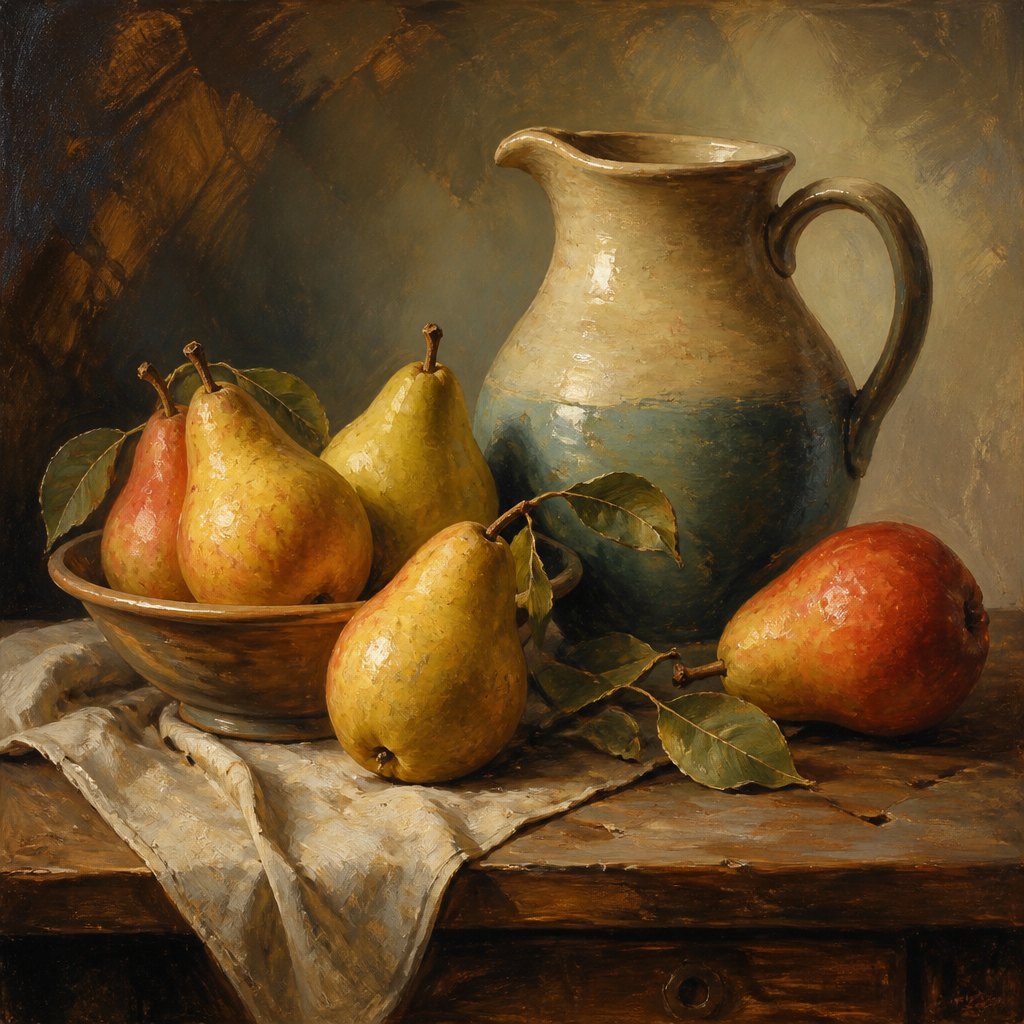 AI-generated
Try it with AI
Get the Oil Painting look in a generator
To evoke oil painting in an AI generator, lean on texture and light vocabulary: 'visible brushstrokes,' 'thick paint texture,' 'oil on canvas,' and 'rich, luminous color' all signal the medium. 'Soft blended transitions' or 'glazed layers' pushes toward a smoother, classical finish, while 'impasto texture' pushes toward thick, sculptural paint. Adding 'canvas texture visible beneath the paint' or 'warm varnished sheen' reinforces the physical, layered quality that separates oil painting from flat digital rendering.
Frequently asked questions
What is oil painting?
Oil painting is a technique that suspends pigment in slow-drying oil, usually linseed, giving artists hours or days of working time to blend colors and rework passages before the paint sets.
How long does oil paint take to dry?
A thin layer can be touch-dry within a day or two, but oil paint fully cures over weeks to months as it oxidizes, which is why layering and varnishing require patience.
Is oil painting harder than acrylic?
Not harder exactly, but different—oil's slow drying rewards blending and patience, while acrylic dries fast and rewards quick layering. Many painters find oil more forgiving because mistakes stay workable longer.
Do I need solvents to paint with oils?
Not necessarily—water-mixable oil paints exist and clean up with soap and water. Traditional oils use mineral spirits for thinning and cleanup, best done in a ventilated space.