 Art
Art

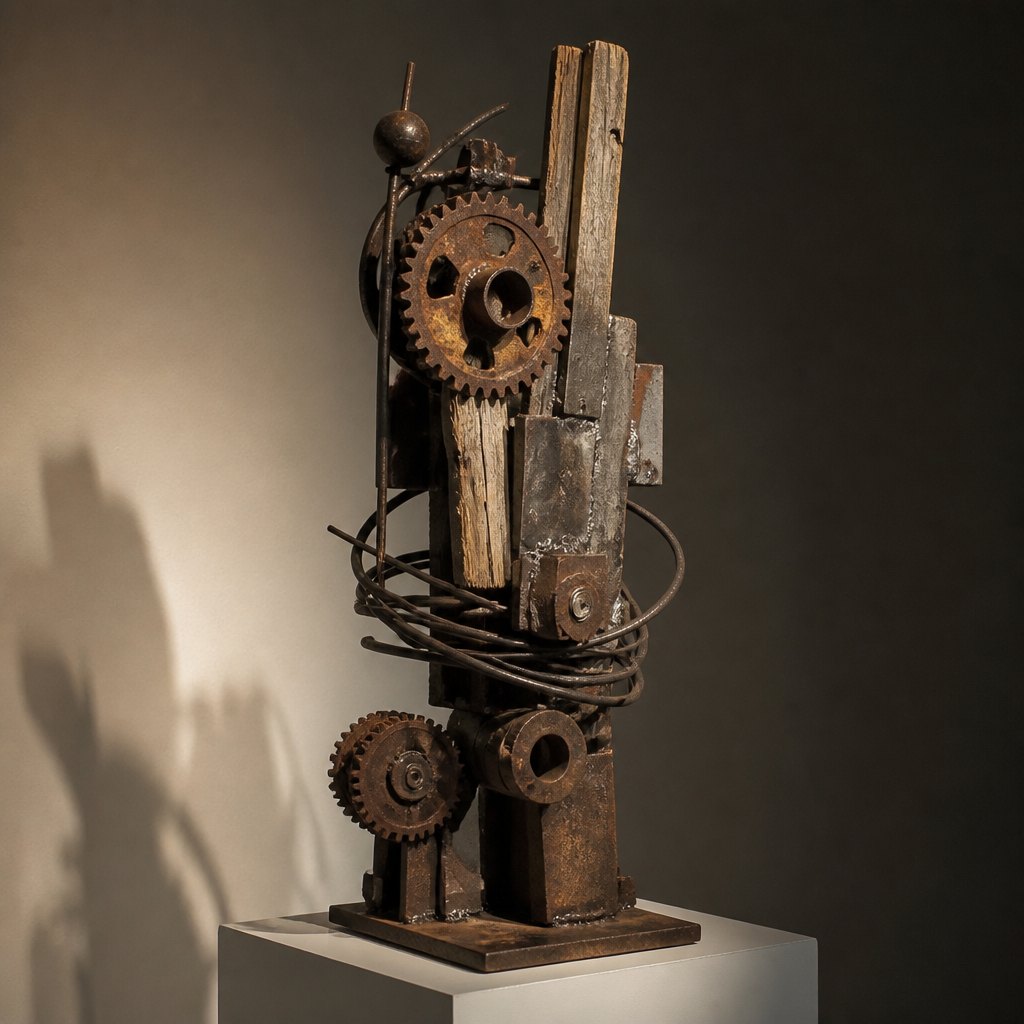
Assemblage is a sculpture technique that builds three-dimensional artwork by combining found objects, manufactured materials, and everyday debris into a single composed piece, rather than carving or modeling a form from scratch. Artists gather existing things — machine parts, furniture fragments, packaging, natural materials, discarded tools — and join them by fastening, welding, gluing, or nailing, letting each object keep some of its original identity even as it becomes part of a new whole. The technique treats the world's leftover material as a supply of ready-made form, texture, and meaning: a rusted gear or a broken toy carries associations no fresh material can fake. Artists reach for assemblage to work quickly and improvisationally, to comment on consumer culture and waste, or simply because an object's found shape suggests a sculptural use no one had planned for it. Unlike collage, which stays essentially flat, assemblage builds fully into three dimensions, occupying real space the way traditional sculpture does.
How to spot it
- 01Recognizable everyday objects — tools, toys, machine parts — left legible within the sculpture.
- 02Mismatched materials and textures combined in one piece: metal beside wood beside fabric.
- 03Visible joins — welds, nails, glue, wire — rather than a smoothly unified surface.
- 04A sense of accumulation or salvage, as if the piece was built from what was on hand.
- 05Worn, weathered, or aged surfaces on the found components themselves.
The Assemblage workshop card
A weekend to build; longer to compose well.Materials
- found and salvaged objects (metal, wood, plastic, fabric)
- wire, nails, screws, and fasteners
- epoxy or industrial adhesive
- welding equipment for metal assemblage
- base, armature, or mounting panel
- hand tools such as pliers and wire cutters
- sealant or varnish for mixed-material stability
Steps
- 1
Gather your materials
Collect objects with an eye for form, texture, and association rather than function — a broken gear or a weathered plank has sculptural potential the moment you notice its shape.
- 2
Sort and arrange
Lay everything out and experiment with groupings before fixing anything permanently, testing how objects relate in scale, material, and implied meaning when placed side by side.
- 3
Decide on a structure
Choose a base, armature, or panel that can physically support the combined weight and shape of your materials, especially for anything freestanding, hanging, or wall-mounted work.
- 4
Build from the ground up
Attach the largest or most structural elements first, then layer smaller objects around and onto them, checking balance and stability at every stage of construction.
- 5
Join with the right method
Match the fastening method to the material: weld or bolt metal, glue or screw wood, wire together mixed materials that won't bond directly to each other.
- 6
Balance found and made
Decide how much of the piece stays purely found versus altered or painted; even small unifying touches, like a shared coat of color, can pull disparate objects together.
- 7
Secure for permanence
Reinforce joints that will bear weight or movement, and seal porous or rusting materials if the piece needs to last, since found objects often arrive already deteriorating.
Classic mistakes
Weak or invisible joins
Gluing heavy objects with adhesive meant for light materials leads to pieces that fail later; match the fastener's strength to the actual weight it's holding.
Losing compositional focus
Piling on too many objects without an organizing idea produces visual noise instead of a composed piece; step back often and ask what the eye should land on first.
Ignoring physical stability
Building top-heavy or unbalanced assemblages without testing them upright risks a piece that tips, wobbles, or collapses entirely once it's finished and set on display.
Overlooking hazardous materials
Rusty metal, broken glass, and sharp edges are common in found objects; wear gloves and check tetanus precautions when handling scrap material.
Where it comes from
Assemblage grew out of early-twentieth-century experiments with collage and constructed sculpture, as artists began incorporating real objects and materials into artworks instead of only representing them in paint. The Dada and Surrealist movements pushed the idea further, using found and provocative objects to challenge what counted as art at all. The term itself gained wide use at mid-century, when American and European artists built freestanding and wall-mounted works entirely from scrap and salvaged material, often responding to consumer culture, urban decay, or personal history. Assemblage overlapped with junk sculpture and later installation art, and its core idea — that any object can become sculptural material — remains a foundational strategy in contemporary mixed-media art.
See it done perfectly
| Work | Maker | Date | What to look at |
|---|---|---|---|
| Bull's Head | Pablo Picasso | 1942 | A bicycle seat and handlebars combined to read instantly as an animal's head. |
| Monogram | Robert Rauschenberg | 1955–1959 | A stuffed goat encircled by a tire atop a painted platform, a landmark combine. |
| Merzbau | Kurt Schwitters | begun 1923 | An entire room built up from found scrap into an immersive assemblage environment. |
| Bicycle Wheel | Marcel Duchamp | 1913 | An early found-object construction mounting a wheel atop a stool, a forerunner of assemblage. |
 AI-generated
Try it with AI
Get the Assemblage look in a generator
Prompt for 'found-object assemblage' or 'mixed-media sculpture' and name the materials directly: rusted metal, weathered wood, salvaged machine parts, scrap fabric — the more specific the material list, the more convincing the texture. Mention visible joins like welded seams, wire bindings, or exposed nails to signal handmade construction rather than a manufactured object. Studio or gallery lighting with strong shadows helps sell the three-dimensional, sculptural presence. Emphasize an accumulated, salvaged quality, with mismatched textures and worn surfaces combined into one object, over anything sleek or uniform.
Frequently asked questions
What is assemblage?
Assemblage is a sculpture technique that builds three-dimensional artwork by joining found objects and everyday materials — metal, wood, fabric, debris — into a single composed piece, rather than carving or modeling a form from raw material.
How is assemblage different from collage?
Collage combines flat materials like paper and fabric on a two-dimensional surface; assemblage builds fully into three dimensions using physical objects, occupying real space the way traditional sculpture does.
Do you need special skills to make assemblage?
Basic joining skills, like gluing, wiring, screwing, or welding, are enough to start; the harder skill is compositional, learning to arrange found objects so the piece reads as intentional rather than random.
What materials work best for assemblage?
Almost anything with interesting form or texture: worn metal, weathered wood, broken tools, packaging, and natural materials all work, as long as they can be physically joined and support the piece's structure.