
ArtTechniques

Techniques / Sculpture & 3D

Stone Carving

Removing stone until the figure hiding inside it appears

Difficulty
Time
weeks per piece, years to master the material
Also called
marble carving
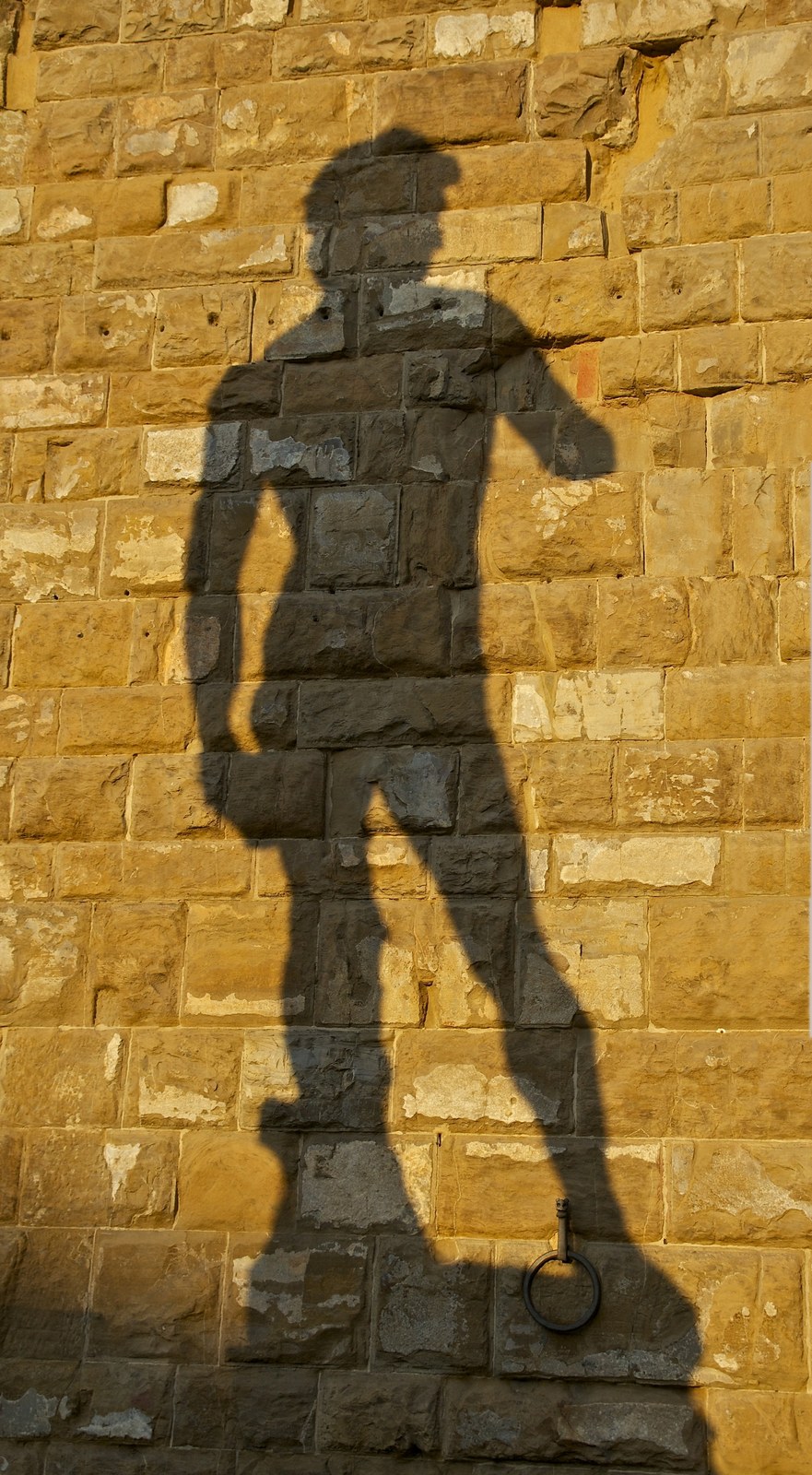
Shadow David Michelangelo cropped — Stone Carving
Shadow David Michelangelo cropped, 2011-06-02 · Shadow_David_Michelangelo.jpg: Jebulon derivative work: Jebulon (talk) · Wikimedia Commons (CC0)
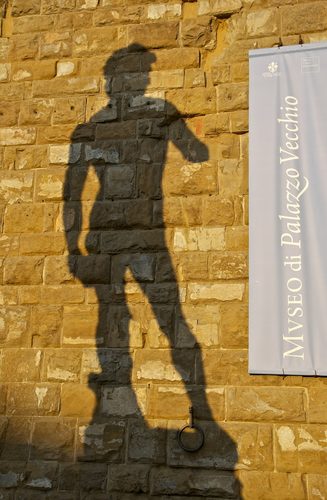
Shadow David Michelangelo — Stone Carving
Shadow David Michelangelo, 2011-06-02 · Jebulon · Wikimedia Commons (CC0)
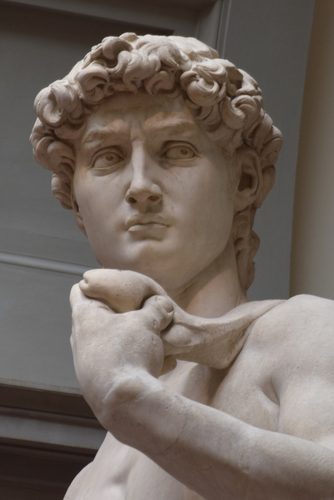
Michelangelo David crop — Stone Carving
Michelangelo David crop, 2019-06-29 12:16:49 · George M. Groutas · Wikimedia Commons (CC BY 2.0)
French:  Vénus de Milo Venus de Milotitle QS:P1476,fr:"Vénus de Milo "label QS:Lfr,"Vénus de Milo "label QS:Les,"Venus de Milo"label QS:Lco,"Venera di Milo"label QS:Lbg,"Венера Милоска"label QS:Lro,"Venus din Milo"label QS:Lur,"وینس دے میلو"label QS:Lsk,"Méloská Venuša"label QS:Luk,"Венера Мілоська"label QS:Lzh-hant,"米洛的維納斯"label QS:Lzh-cn,"米洛的维纳斯"label QS:Lgsw,"Venus von Milo"label QS:Lko,"밀로의 비너스"label QS:Leo,"Melosa Venuso"label QS:Lcs,"Venuše Mélská"label QS:Lbs,"Miloska Venera"label QS:Ljv,"Venus de Milo"label QS:Lhr,"Miloska Venera"label QS:Lvi,"Tượng thần Vệ Nữ"label QS:Llv,"Mēlas afrodīte"label QS:Laf,"Venus de Milo"label QS:Lsr,"Милоска Венера"label QS:Lzh-sg,"米洛的维纳斯"label QS:Lnn,"Venus frå Milo"label QS:Lnb,"Venus fra Milo"label QS:Laz,"Miloslu Venera heykəli"label QS:Len,"Venus de Milo"label QS:Lar,"فينوس دي ميلو"label QS:Lbr,"Afrodite Melos"label QS:Lyue,"維納斯像"label QS:Lhu,"Méloszi Aphrodité"label QS:Leu,"Venus Milokoa"label QS:Last,"Venus de Milo"label QS:Lru,"Венера Милосская"label QS:Lde,"Venus von Milo"label QS:Lga,"Venus de Milo"label QS:Lfa,"ونوس میلو"label QS:Lzh,"米洛的维纳斯"label QS:Lda,"Venus fra Milo"label QS:Lka,"ვენერა მილოსელი"label QS:Lja,"ミロのヴィーナス"label QS:Lhe,"ונוס ממילו"label QS:Lla,"Venus Melia"label QS:Lwuu,"米洛个维纳斯"label QS:Lfi,"Milon Venus"label QS:Lsi,"වීනස් ඩි මිලෝ"label QS:Lta,"மிலோவின் வீனசு"label QS:Lit,"Venere di Milo"label QS:Lel,"Αφροδίτη της Μήλου"label QS:Lwar,"Venus de Milo"label QS:Let,"Mílose Venus"label QS:Lnan,"Milo ê Venus"label QS:Lmk,"Милоска Венера"label QS:Lzh-hk,"米洛的維納斯"label QS:Lhy,"Միլոսյան Վեներա"label QS:Lnl,"Venus van Milo"label QS:Lscn,"Vèniri di Milu"label QS:Lpt,"Vênus de Milo"label QS:Lca,"Venus de Milo"label QS:Lbe,"Венера Мілоская"label QS:Lth,"วีนัสเดอไมโล"label QS:Llt,"Milo Venera"label QS:Lsl,"Miloška Venera"label QS:Lpnb,"مائلو دی وینس"label QS:Lsv,"Venus från Milo"label QS:Lsr-ec,"Милоска Венера"label QS:Lid,"Venus de Milo"label QS:Lpl,"Wenus z Milo"label QS:Ltr,"Venus de Milo"label QS:Lzh-tw,"米洛的維納斯"label QS:Loc,"Vènus de Milo"label QS:Lsr-el,"Miloska Venera"label QS:Lsh,"Venera Miloska"label QS:Lgl,"Venus de Milo"label QS:Lksh,"Venus va Milo"label QS:Lzh-hans,"米洛的维纳斯"label QS:Lbe-tarask,"Вэнэра Мілёская" — Stone Carving
French: Vénus de Milo Venus de Milotitle QS:P1476,fr:"Vénus de Milo "label QS:Lfr,"Vénus de Milo "label QS:Les,"Venus de Milo"label QS:Lco,"Venera di Milo"label QS:Lbg,"Венера Милоска"label QS:Lro,"Venus din Milo"label QS:Lur,"وینس دے میلو"label QS:Lsk,"Méloská Venuša"label QS:Luk,"Венера Мілоська"label QS:Lzh-hant,"米洛的維納斯"label QS:Lzh-cn,"米洛的维纳斯"label QS:Lgsw,"Venus von Milo"label QS:Lko,"밀로의 비너스"label QS:Leo,"Melosa Venuso"label QS:Lcs,"Venuše Mélská"label QS:Lbs,"Miloska Venera"label QS:Ljv,"Venus de Milo"label QS:Lhr,"Miloska Venera"label QS:Lvi,"Tượng thần Vệ Nữ"label QS:Llv,"Mēlas afrodīte"label QS:Laf,"Venus de Milo"label QS:Lsr,"Милоска Венера"label QS:Lzh-sg,"米洛的维纳斯"label QS:Lnn,"Venus frå Milo"label QS:Lnb,"Venus fra Milo"label QS:Laz,"Miloslu Venera heykəli"label QS:Len,"Venus de Milo"label QS:Lar,"فينوس دي ميلو"label QS:Lbr,"Afrodite Melos"label QS:Lyue,"維納斯像"label QS:Lhu,"Méloszi Aphrodité"label QS:Leu,"Venus Milokoa"label QS:Last,"Venus de Milo"label QS:Lru,"Венера Милосская"label QS:Lde,"Venus von Milo"label QS:Lga,"Venus de Milo"label QS:Lfa,"ونوس میلو"label QS:Lzh,"米洛的维纳斯"label QS:Lda,"Venus fra Milo"label QS:Lka,"ვენერა მილოსელი"label QS:Lja,"ミロのヴィーナス"label QS:Lhe,"ונוס ממילו"label QS:Lla,"Venus Melia"label QS:Lwuu,"米洛个维纳斯"label QS:Lfi,"Milon Venus"label QS:Lsi,"වීනස් ඩි මිලෝ"label QS:Lta,"மிலோவின் வீனசு"label QS:Lit,"Venere di Milo"label QS:Lel,"Αφροδίτη της Μήλου"label QS:Lwar,"Venus de Milo"label QS:Let,"Mílose Venus"label QS:Lnan,"Milo ê Venus"label QS:Lmk,"Милоска Венера"label QS:Lzh-hk,"米洛的維納斯"label QS:Lhy,"Միլոսյան Վեներա"label QS:Lnl,"Venus van Milo"label QS:Lscn,"Vèniri di Milu"label QS:Lpt,"Vênus de Milo"label QS:Lca,"Venus de Milo"label QS:Lbe,"Венера Мілоская"label QS:Lth,"วีนัสเดอไมโล"label QS:Llt,"Milo Venera"label QS:Lsl,"Miloška Venera"label QS:Lpnb,"مائلو دی وینس"label QS:Lsv,"Venus från Milo"label QS:Lsr-ec,"Милоска Венера"label QS:Lid,"Venus de Milo"label QS:Lpl,"Wenus z Milo"label QS:Ltr,"Venus de Milo"label QS:Lzh-tw,"米洛的維納斯"label QS:Loc,"Vènus de Milo"label QS:Lsr-el,"Miloska Venera"label QS:Lsh,"Venera Miloska"label QS:Lgl,"Venus de Milo"label QS:Lksh,"Venus va Milo"label QS:Lzh-hans,"米洛的维纳斯"label QS:Lbe-tarask,"Вэнэра Мілёская", between 150 and 125 BCdate QS:P,-150-00-00T00:00:00Z/7,P1319,-0150-00-00T00:00:0 · Unknown artistUnknown artist · Wikimedia Commons (CC BY-SA 2.5)
French:  Vénus de Milo Venus de Milotitle QS:P1476,fr:"Vénus de Milo "label QS:Lfr,"Vénus de Milo "label QS:Les,"Venus de Milo"label QS:Lco,"Venera di Milo"label QS:Lbg,"Венера Милоска"label QS:Lro,"Venus din Milo"label QS:Lur,"وینس دے میلو"label QS:Lsk,"Méloská Venuša"label QS:Luk,"Венера Мілоська"label QS:Lzh-hant,"米洛的維納斯"label QS:Lzh-cn,"米洛的维纳斯"label QS:Lgsw,"Venus von Milo"label QS:Lko,"밀로의 비너스"label QS:Leo,"Melosa Venuso"label QS:Lcs,"Venuše Mélská"label QS:Lbs,"Miloska Venera"label QS:Ljv,"Venus de Milo"label QS:Lhr,"Miloska Venera"label QS:Lvi,"Tượng thần Vệ Nữ"label QS:Llv,"Mēlas afrodīte"label QS:Laf,"Venus de Milo"label QS:Lsr,"Милоска Венера"label QS:Lzh-sg,"米洛的维纳斯"label QS:Lnn,"Venus frå Milo"label QS:Lnb,"Venus fra Milo"label QS:Laz,"Miloslu Venera heykəli"label QS:Len,"Venus de Milo"label QS:Lar,"فينوس دي ميلو"label QS:Lbr,"Afrodite Melos"label QS:Lyue,"維納斯像"label QS:Lhu,"Méloszi Aphrodité"label QS:Leu,"Venus Milokoa"label QS:Last,"Venus de Milo"label QS:Lru,"Венера Милосская"label QS:Lde,"Venus von Milo"label QS:Lga,"Venus de Milo"label QS:Lfa,"ونوس میلو"label QS:Lzh,"米洛的维纳斯"label QS:Lda,"Venus fra Milo"label QS:Lka,"ვენერა მილოსელი"label QS:Lja,"ミロのヴィーナス"label QS:Lhe,"ונוס ממילו"label QS:Lla,"Venus Melia"label QS:Lwuu,"米洛个维纳斯"label QS:Lfi,"Milon Venus"label QS:Lsi,"වීනස් ඩි මිලෝ"label QS:Lta,"மிலோவின் வீனசு"label QS:Lit,"Venere di Milo"label QS:Lel,"Αφροδίτη της Μήλου"label QS:Lwar,"Venus de Milo"label QS:Let,"Mílose Venus"label QS:Lnan,"Milo ê Venus"label QS:Lmk,"Милоска Венера"label QS:Lzh-hk,"米洛的維納斯"label QS:Lhy,"Միլոսյան Վեներա"label QS:Lnl,"Venus van Milo"label QS:Lscn,"Vèniri di Milu"label QS:Lpt,"Vênus de Milo"label QS:Lca,"Venus de Milo"label QS:Lbe,"Венера Мілоская"label QS:Lth,"วีนัสเดอไมโล"label QS:Llt,"Milo Venera"label QS:Lsl,"Miloška Venera"label QS:Lpnb,"مائلو دی وینس"label QS:Lsv,"Venus från Milo"label QS:Lsr-ec,"Милоска Венера"label QS:Lid,"Venus de Milo"label QS:Lpl,"Wenus z Milo"label QS:Ltr,"Venus de Milo"label QS:Lzh-tw,"米洛的維納斯"label QS:Loc,"Vènus de Milo"label QS:Lsr-el,"Miloska Venera"label QS:Lsh,"Venera Miloska"label QS:Lgl,"Venus de Milo"label QS:Lksh,"Venus va Milo"label QS:Lzh-hans,"米洛的维纳斯"label QS:Lbe-tarask,"Вэнэра Мілёская" — Stone Carving
French: Vénus de Milo Venus de Milotitle QS:P1476,fr:"Vénus de Milo "label QS:Lfr,"Vénus de Milo "label QS:Les,"Venus de Milo"label QS:Lco,"Venera di Milo"label QS:Lbg,"Венера Милоска"label QS:Lro,"Venus din Milo"label QS:Lur,"وینس دے میلو"label QS:Lsk,"Méloská Venuša"label QS:Luk,"Венера Мілоська"label QS:Lzh-hant,"米洛的維納斯"label QS:Lzh-cn,"米洛的维纳斯"label QS:Lgsw,"Venus von Milo"label QS:Lko,"밀로의 비너스"label QS:Leo,"Melosa Venuso"label QS:Lcs,"Venuše Mélská"label QS:Lbs,"Miloska Venera"label QS:Ljv,"Venus de Milo"label QS:Lhr,"Miloska Venera"label QS:Lvi,"Tượng thần Vệ Nữ"label QS:Llv,"Mēlas afrodīte"label QS:Laf,"Venus de Milo"label QS:Lsr,"Милоска Венера"label QS:Lzh-sg,"米洛的维纳斯"label QS:Lnn,"Venus frå Milo"label QS:Lnb,"Venus fra Milo"label QS:Laz,"Miloslu Venera heykəli"label QS:Len,"Venus de Milo"label QS:Lar,"فينوس دي ميلو"label QS:Lbr,"Afrodite Melos"label QS:Lyue,"維納斯像"label QS:Lhu,"Méloszi Aphrodité"label QS:Leu,"Venus Milokoa"label QS:Last,"Venus de Milo"label QS:Lru,"Венера Милосская"label QS:Lde,"Venus von Milo"label QS:Lga,"Venus de Milo"label QS:Lfa,"ونوس میلو"label QS:Lzh,"米洛的维纳斯"label QS:Lda,"Venus fra Milo"label QS:Lka,"ვენერა მილოსელი"label QS:Lja,"ミロのヴィーナス"label QS:Lhe,"ונוס ממילו"label QS:Lla,"Venus Melia"label QS:Lwuu,"米洛个维纳斯"label QS:Lfi,"Milon Venus"label QS:Lsi,"වීනස් ඩි මිලෝ"label QS:Lta,"மிலோவின் வீனசு"label QS:Lit,"Venere di Milo"label QS:Lel,"Αφροδίτη της Μήλου"label QS:Lwar,"Venus de Milo"label QS:Let,"Mílose Venus"label QS:Lnan,"Milo ê Venus"label QS:Lmk,"Милоска Венера"label QS:Lzh-hk,"米洛的維納斯"label QS:Lhy,"Միլոսյան Վեներա"label QS:Lnl,"Venus van Milo"label QS:Lscn,"Vèniri di Milu"label QS:Lpt,"Vênus de Milo"label QS:Lca,"Venus de Milo"label QS:Lbe,"Венера Мілоская"label QS:Lth,"วีนัสเดอไมโล"label QS:Llt,"Milo Venera"label QS:Lsl,"Miloška Venera"label QS:Lpnb,"مائلو دی وینس"label QS:Lsv,"Venus från Milo"label QS:Lsr-ec,"Милоска Венера"label QS:Lid,"Venus de Milo"label QS:Lpl,"Wenus z Milo"label QS:Ltr,"Venus de Milo"label QS:Lzh-tw,"米洛的維納斯"label QS:Loc,"Vènus de Milo"label QS:Lsr-el,"Miloska Venera"label QS:Lsh,"Venera Miloska"label QS:Lgl,"Venus de Milo"label QS:Lksh,"Venus va Milo"label QS:Lzh-hans,"米洛的维纳斯"label QS:Lbe-tarask,"Вэнэра Мілёская", between 150 and 125 BCdate QS:P,-150-00-00T00:00:00Z/7,P1319,-0150-00-00T00:00:0 · Unknown authorUnknown author · Wikimedia Commons (CC BY-SA 2.5)

Stone carving is a subtractive sculpture technique in which the artist removes material from a solid block of stone—marble, granite, limestone, or similar—using hand or power tools, working from the outside in until the finished form emerges. Unlike modeling in clay or casting in bronze, nothing can be added back once cut away, so stone carving demands careful planning, often through drawings or small models, before the chisel ever touches the block. Artists typically work in defined stages: roughing out the general mass with heavy tools, refining proportions and major forms, then finishing surface detail and texture with progressively finer instruments and abrasives. Stone carvers reach for this technique when they want permanence and a material presence no other sculptural medium quite offers—the finished stone still carries the record of its own removal, in surface texture ranging from rough-hewn to mirror-polished. It remains one of sculpture's oldest and most physically demanding practices.

How to spot it

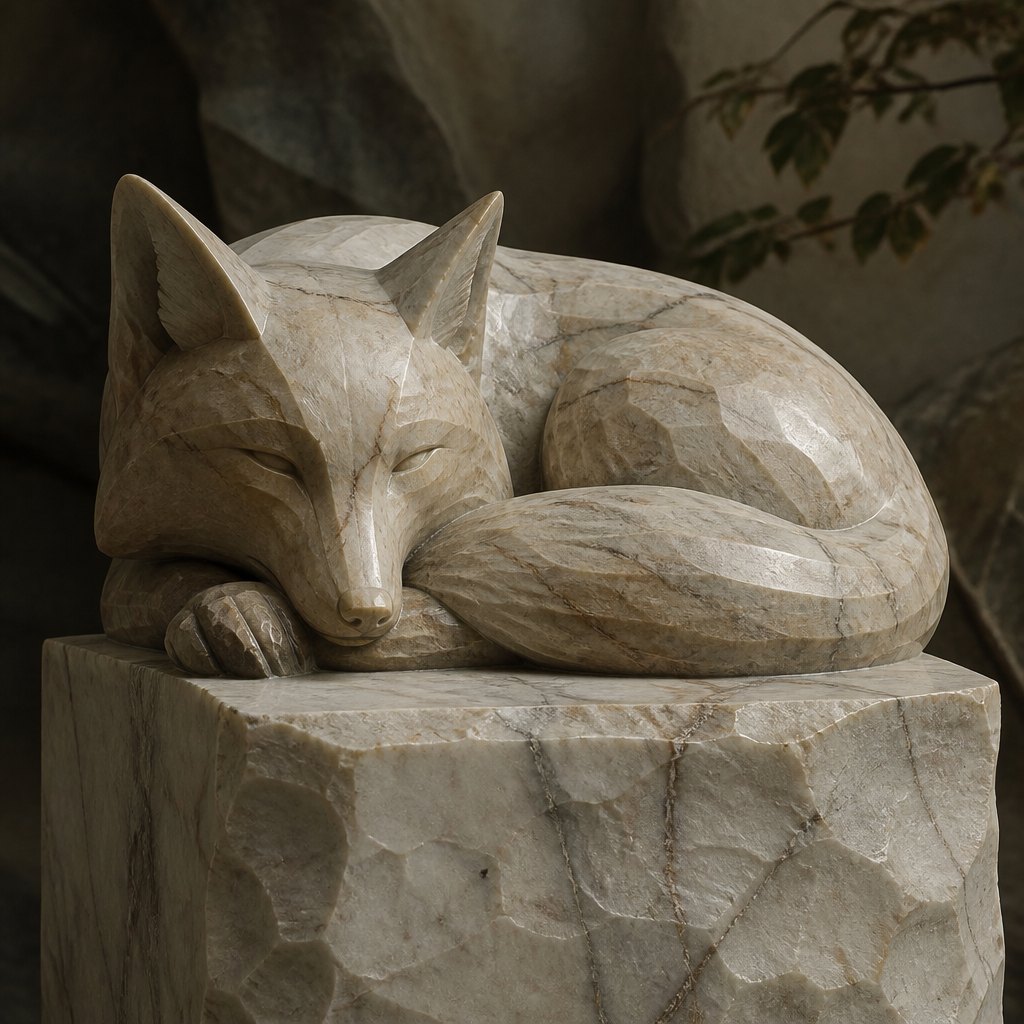
  • 01Visible tool marks—chisel facets, rasp scratches, or polish—left as intentional surface texture
  • 02Contrast between roughly finished passages and smoothly polished ones on the same piece
  • 03A sense of mass and weight the material itself seems to hold
  • 04Forms that stay compact and closed, since thin unsupported stone risks breaking
  • 05Natural veining, grain, or color variation in the stone visible through the carved surface

The Stone Carving workshop card

weeks per piece, years to master the material

Materials

  • marble, granite, or limestone block
  • point chisel and tooth chisel
  • flat chisel and bullnose chisel
  • carving mallet
  • rasps and rifflers for shaping
  • abrasive papers and polishing compound
  • pneumatic or angle-grinder power tools
  • dust mask and eye protection

Steps

  1. 1

    Plan the form

    Work out proportions carefully in a small clay or plaster model, or in scale drawings from multiple angles, before ever committing tools to the stone.

  2. 2

    Rough out the mass

    Use a point chisel and mallet, or a power tool, to remove large volumes of excess stone quickly, staying well outside your intended final lines.

  3. 3

    Establish major planes

    Switch to a tooth chisel to define the broad forms and overall proportions more precisely, while still leaving a healthy margin for any later adjustment.

  4. 4

    Refine with flat chisels

    Carve closer to the finished surface with flat and bullnose chisels, working from all angles to check the whole form reads correctly in the round.

  5. 5

    Smooth with rasps and rifflers

    Work rasps and small rifflers steadily over the whole surface to remove leftover chisel facets and refine curves and transitions between the major carved forms.

  6. 6

    Sand through the grits

    Progress steadily through several successively finer grades of abrasive paper to bring the surface toward the finish you actually want, anywhere from matte to glassy.

  7. 7

    Polish or leave textured

    Apply polishing compound for a mirror sheen, or stop deliberately at a rougher stage, since contrasting finishes can emphasize different parts of the finished form.

  8. 8

    Protect your lungs

    Wear a proper respirator and full eye protection whenever grinding or sanding stone, since fine dust—especially from prolonged carving sessions—is a genuine, well-documented respiratory hazard.

Classic mistakes

Removing too much too soon

Carving past your intended line is irreversible in stone, so always work from rough to refined, leaving margin at every stage.

Ignoring the stone's grain

Cutting against natural veining or bedding planes risks unexpected cracks or chips; study the block before committing to a design.

Skipping the rough-out plan

Carving directly toward finished detail without blocking in the whole mass first often leads to proportions that don't work together.

Working without dust protection

Grinding and sanding stone for long periods without a respirator exposes the carver to fine silica dust; always ventilate and wear protection.

Where it comes from

Stone carving is among the oldest human art forms, practiced across ancient Egypt, Greece, and beyond for monumental and religious sculpture. Classical Greek and Roman sculptors developed sophisticated techniques for marble in particular, prizing its fine grain and subtle translucency for rendering the human form with anatomical precision. The technique reached a celebrated peak during the Italian Renaissance, when sculptors returned to classical ideals and pushed marble carving toward extraordinary technical virtuosity in surface finish and figural complexity. Stone carving remained central to public and religious sculpture for centuries afterward, valued for its permanence and monumental scale. While cast bronze and later modern materials expanded sculptors' options, direct stone carving persisted as a discipline prized specifically for its unforgiving, irreversible physical process.

See it done perfectly

WorkMakerDateWhat to look at
DavidMichelangelo Buonarroti1501–1504Carved from a single block of marble, showcasing anatomical precision and a monumental, unified pose.
PietàMichelangelo Buonarroti1498–1499Renowned for its polished marble finish and the technical difficulty of its interlocking figures.
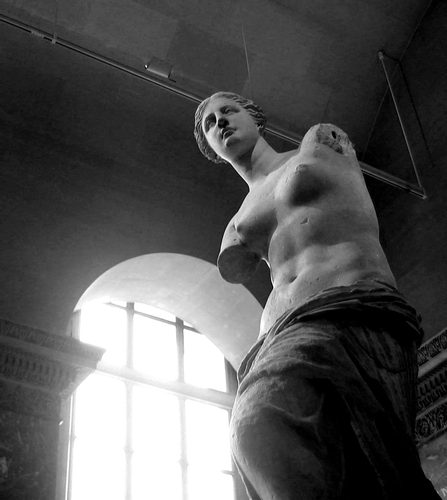
Venus de MiloUnknownc. 2nd century BCEAncient Greek marble carving admired for its idealized, naturalistic rendering of the human form.
AI-generated demonstration of Stone CarvingAI-generated

Try it with AI

Get the Stone Carving look in a generator

To suggest stone carving in an AI prompt, describe surface and material: 'chiseled marble texture,' 'rough-hewn stone surface,' or 'polished stone with visible tool marks.' Contrast a smooth, glassy finish in some areas with raw, faceted texture elsewhere to suggest the carving process itself. Words like 'weighty,' 'monumental,' 'carved from solid stone,' and 'natural veining' help. Lighting that rakes across the surface reveals chisel texture convincingly. Avoid describing soft, malleable, or bendable forms, since stone carving produces compact, structurally sound shapes that respect the material's rigidity and weight.

Open the Stone Carving Sculpture Art Style generator →

Frequently asked questions

What is stone carving?

Stone carving is a subtractive sculpture technique where material is cut, chipped, and ground away from a solid block until the finished form remains; nothing is added back once removed.

What's the difference between marble and other carving stones?

Marble has a fine, even grain and slight translucency that suits detailed figurative work, while granite and limestone are harder or softer with different working properties and finishes.

How long does stone carving take?

A small piece might take days to weeks; a large figurative work can take months or years, since removing stone carefully and correcting proportions takes real time.

Is stone carving dangerous?

The main hazard is dust—prolonged grinding or sanding without a respirator can be harmful to breathe, so ventilation and basic protective gear matter.