 Art
Art
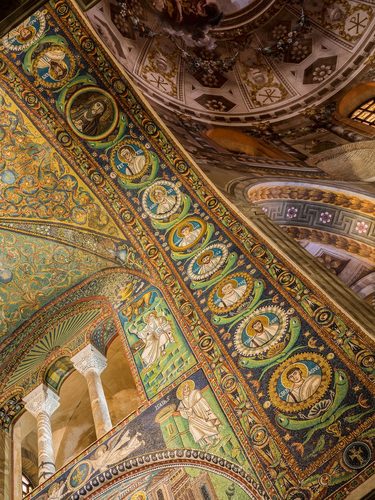
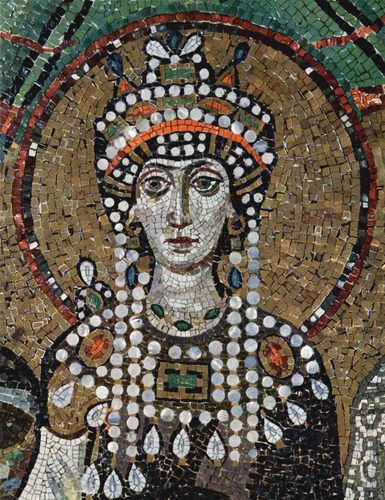
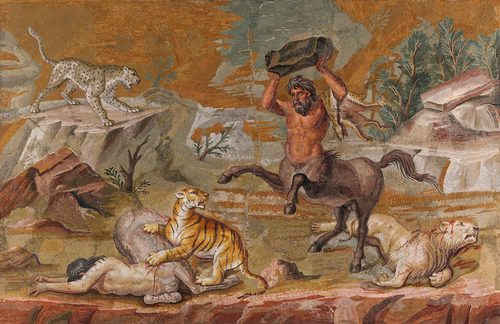
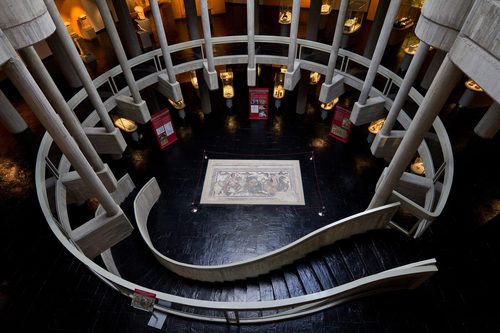
Mosaic is a surface-decoration technique that builds an image or pattern out of small individual pieces, called tesserae, set into an adhesive bed of mortar, plaster, or cement rather than drawn or painted directly. Traditional tesserae are cut from stone, marble, ceramic, or colored glass, each piece placed by hand to build up color, tone, and form the way brushstrokes build a painting, but with fixed, discrete units instead of blended pigment. Artists reach for mosaic because it is extraordinarily durable — floors, walls, and domes covered in mosaic have survived millennia of weather and foot traffic that would destroy painted decoration — and because the individual tesserae catch light in a way flat paint cannot, especially when glass or gold-backed pieces are set at slight angles to glitter and shift as a viewer moves. The technique suits architectural surfaces above all: floors, walls, vaults, and fountains where a permanent, washable, light-catching image is worth the labor of setting thousands of small pieces by hand.
How to spot it
- 01A visibly grid-like or irregular pattern of small individual tile pieces, not a continuous surface.
- 02Faint grout lines running between every piece, forming a texture at close range.
- 03Glass tesserae set at slight angles that glitter or shift color as you move.
- 04Coarser, larger tesserae used for distant architectural surfaces like domes and ceilings.
- 05Sharp geometric or figural imagery that reads clearly only from a slight distance.
The Mosaic workshop card
Days for a small panel; longer for walls.Materials
- tesserae cut from stone, marble, ceramic, or glass tile
- tile nippers or hammer and hardie
- mortar or thin-set adhesive
- grout
- backing board or wall substrate
- grid paper or a cartoon for planning the design
- sealant for outdoor or wet-area work
Steps
- 1
Plan the design
Draw a full-scale cartoon of the image, working out where color and tone changes will fall, since each tessera placement is a small, hard-to-undo decision.
- 2
Prepare the surface
Clean and prime the backing surface so the adhesive bonds securely to it; an unstable or dirty base is the most common reason mosaics fail years later.
- 3
Cut the tesserae
Cut stone, tile, or glass into individual pieces with nippers or a hammer and hardie, aiming for consistent thickness so the finished surface stays roughly even.
- 4
Set piece by piece
Press each tessera into the adhesive bed following the design lines, leaving small, even gaps between pieces for grout as you follow the underlying form.
- 5
Follow the form with direction
Angle rows of tesserae to follow contours, like a curved cheek or a rounded dome, so the piece pattern itself reinforces the image's three-dimensional feel.
- 6
Grout the surface
Once the adhesive has cured, force grout into every gap between tesserae, then wipe the surface clean before it hardens, filling the piece with a unifying background tone.
- 7
Polish and seal
Buff the finished surface and apply sealant if the piece will face weather or foot traffic, protecting both tesserae and grout lines from moisture and wear.
Classic mistakes
Inconsistent tessera thickness
Mixing pieces of very different thickness creates an uneven surface that catches light strangely and traps dirt in the low spots; sort materials by thickness before setting.
Ignoring directional flow
Setting all tesserae in a flat, uniform grid regardless of the image ignores one of mosaic's strengths: using piece direction to model form and movement.
Rushing the grout lines
Uneven gaps between tesserae make grout lines wander and disrupt the design; keep spacing consistent as you work rather than fixing it all at the end.
Weak substrate for the setting
Setting mosaic onto a flexible or poorly bonded surface leads to cracking and pieces popping loose once the structure moves or settles.
Where it comes from
Mosaic developed in the ancient Near East and reached technical heights in Greek and especially Roman floor mosaics, which covered villas and public buildings across the empire with figural scenes and geometric patterns made from small stone and glass tesserae. Byzantine artists took the technique to its most luminous extreme, covering church walls and domes in gold-backed glass tesserae set at calculated angles to catch candlelight, a tradition that shaped religious interiors across the Byzantine world and beyond. Islamic architecture developed its own parallel mosaic tradition using cut tile in complex geometric tessellations rather than figural imagery. The technique declined in fine art after the Renaissance shift toward painting but persisted in architectural decoration and saw a revival in the late nineteenth and twentieth centuries among artists and designers drawn to its texture and permanence.
See it done perfectly
| Work | Maker | Date | What to look at |
|---|---|---|---|
| Alexander Mosaic | Unknown | c. 100 BCE | A floor mosaic from Pompeii using tiny tesserae to render a dramatic battle scene. |
| Mosaics of the Basilica of San Vitale | Unknown | 6th century | Gold-backed glass tesserae set at angles to shimmer under candlelight inside a Byzantine church. |
| Mosaics of the Basilica di San Marco | Unknown | 11th–13th century | Vast gold-ground mosaic cycles covering the domes and walls of a Venetian basilica. |
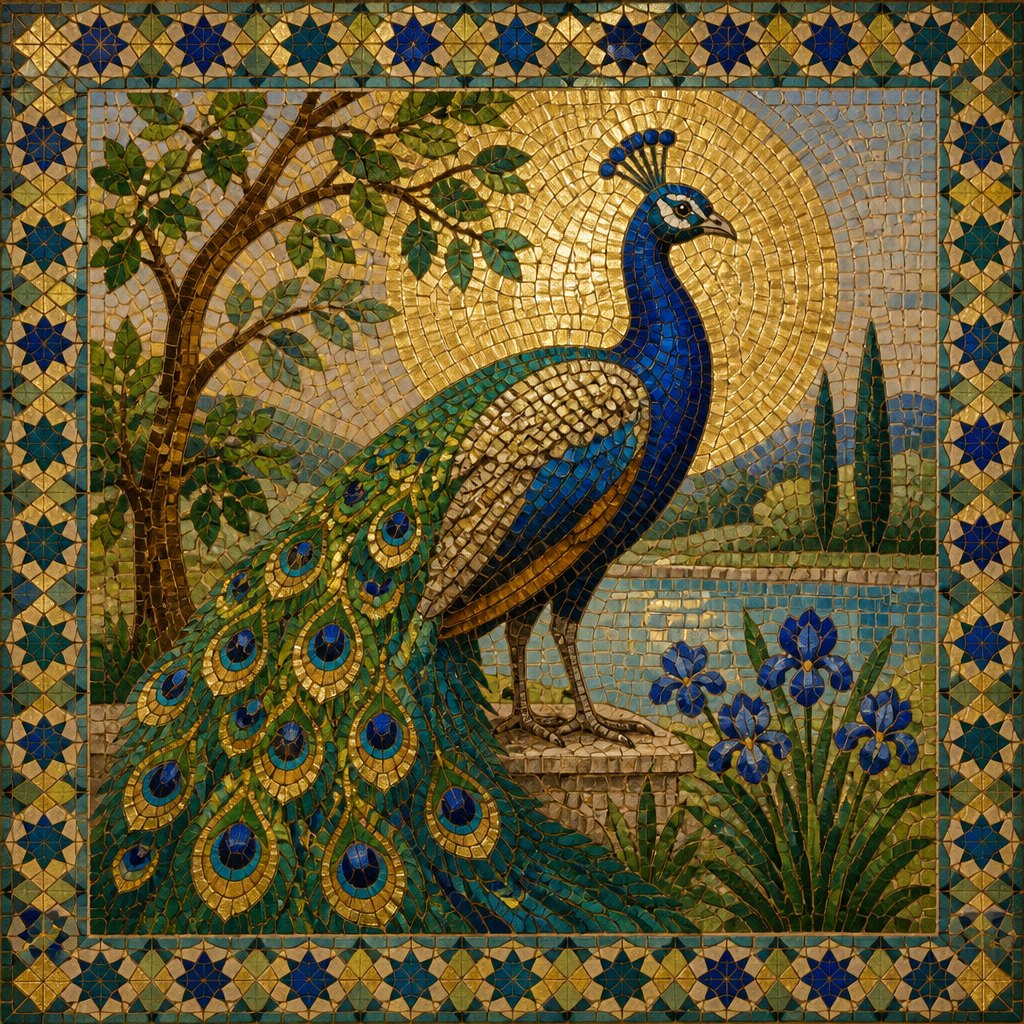 AI-generated
Try it with AI
Get the Mosaic look in a generator
Ask for 'mosaic' or 'tessellated tile artwork' and describe the tesserae directly: small square glass tiles, cut stone fragments, gold-backed glass tesserae, visible grout lines between pieces. Specify a grid-like or tessellated surface pattern rather than smooth continuous color, and mention light catching individual angled tiles for a shimmering, faceted look. Architectural framing helps, like mosaic floor, mosaic dome, or mosaic wall panel, since the technique reads most convincingly at that scale. Avoid describing brushstrokes or painterly blending, which pull the image away from mosaic's fragmented, piece-by-piece structure.
Frequently asked questions
What is mosaic?
Mosaic is a technique that builds an image or pattern from small individual pieces, called tesserae, of stone, glass, or ceramic set into an adhesive bed, rather than painted or drawn directly onto a surface.
What are tesserae?
Tesserae are the small individual pieces, usually cut stone, ceramic tile, or colored glass, that are set together to form a mosaic's image; the word shares a root with 'tessellation.'
Can you make mosaic art at home?
Yes — small mosaic projects using precut glass or ceramic tile, tile nippers, and premixed adhesive are accessible to beginners; larger architectural mosaics require more planning and structural preparation.
Why do old mosaics survive so well?
Stone and glass tesserae set in mortar resist weather, foot traffic, and fading far better than paint or plaster, which is why ancient floor and wall mosaics often survive in far better condition than paintings from the same era.