 Art
Art
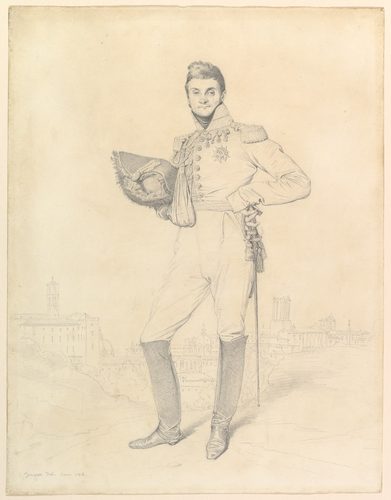
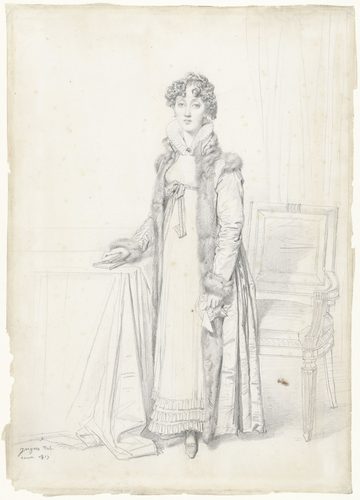
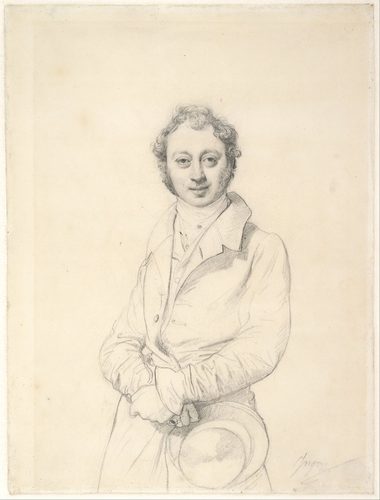
Contour drawing is a technique that renders a subject using continuous line alone, tracing the edges where a form meets the space around it — its silhouette, and the inner edges where planes turn, like the ridge of a knuckle or the fold of a collar. There's no shading, no cross-hatching, no filled-in tone; the line itself has to carry all the information about form, weight, and structure.
Its most demanding version, blind contour, asks the artist to look only at the subject and never at the paper, forcing the eye to travel the actual edge in real time instead of relying on memorized shorthand for how a hand or a face 'should' look. The resulting line is often wobbly and imperfect, which is exactly the point.
Art schools use it as a foundational exercise because it retrains observation itself, breaking the habit of drawing symbols instead of what's actually in front of you.
How to spot it
- 01A single continuous line with no shading, hatching, or filled tone anywhere.
- 02Inner lines marking where planes turn, like knuckles, wrinkles, or folds, not just the outer silhouette.
- 03Slightly wobbly, searching line quality, especially in blind-contour studies.
- 04No erased corrections — the line reads as one unbroken pass.
- 05Emphasis on edge and form over surface detail or texture.
The Contour Drawing workshop card
minutes per study, a lifetime to truly seeMaterials
- ballpoint pen or fineliner (hard to erase, which is the point)
- newsprint or inexpensive sketch paper
- a stable subject or model to observe
- sketchbook with unlined, smooth pages
- timer for timed contour exercises
Steps
- 1
Choose a starting edge
Pick one point on the subject's outline — a shoulder, a leaf tip, a chair leg — and commit to starting your line there rather than sketching the whole shape first.
- 2
Move your eye slower than your hand
Let your eye travel the actual edge of the form at a slow, steady pace, and trust your hand to follow along the paper roughly in sync, even if you can't see the result yet.
- 3
Never lift the pen
Keep the line continuous for as long as possible, even through jumps between separate edges — a single unbroken line forces commitment and kills the habit of fussy, restarted strokes.
- 4
Include the inner contours
Don't stop at the outer silhouette; trace the edges inside the form too, like where a sleeve folds or a jaw turns, since those inner lines carry most of the structural information.
- 5
Resist checking the paper
In a blind contour exercise, keep your eyes on the subject the entire time; peeking defeats the purpose, which is training the eye-hand connection, not producing a clean result.
- 6
Vary your pace with the form
Slow down through complex, detailed edges and let the line move faster across simple, straight stretches — pace itself becomes part of how the drawing describes the subject.
- 7
Accept the wobble
A shaky, imperfect line is a sign the exercise is working, not a failure — smoothing it out later defeats the purpose of training observation.
Classic mistakes
Sneaking glances at the paper
Checking the page during a blind contour exercise short-circuits the whole point, which is forcing the eye to do the looking instead of the hand doing the guessing.
Drawing symbols instead of edges
Falling back on a memorized shorthand for 'eye' or 'hand' instead of actually tracing what's in front of you produces generic shapes, not observed contour.
Lifting the pen constantly
Restarting the line every few seconds breaks the continuous, committed quality that makes contour drawing valuable as a training exercise.
Rushing through complex edges
Moving at the same fast pace across a detailed area, like fingers or foliage, as across a simple straight edge loses the information those complex edges hold.
Where it comes from
Drawing purely from contour is as old as drawing itself, but it became a formalized teaching exercise in 20th-century art education, when instructors began using slow, single-line studies to break students of the habit of drawing what they think a hand or face looks like rather than what's actually in front of them. Blind contour drawing, in particular, became a standard studio-class exercise for training observation over memory.
The approach echoes older traditions of pure line — the confident, unbroken outlines of classical figure drawing and the calligraphic economy of East Asian ink painting, both of which prize a single committed line over built-up shading. As a teaching method, it remains one of the most widely assigned exercises in beginning drawing courses.
See it done perfectly
| Work | Maker | Date | What to look at |
|---|---|---|---|
| Continuous single-line drawings | Pablo Picasso | mid-20th century | Rendered animals and faces in one unbroken contour line, without lifting the pen. |
| Late-career line portraits | Henri Matisse | 1940s–1950s | Reduced faces and figures to a single confident contour, cutting away everything but essential edge. |
| Portrait drawings | Alberto Giacometti | 1950s–1960s | Built up repeated, searching contour lines that never fully settle, mirroring the eye's actual searching process. |
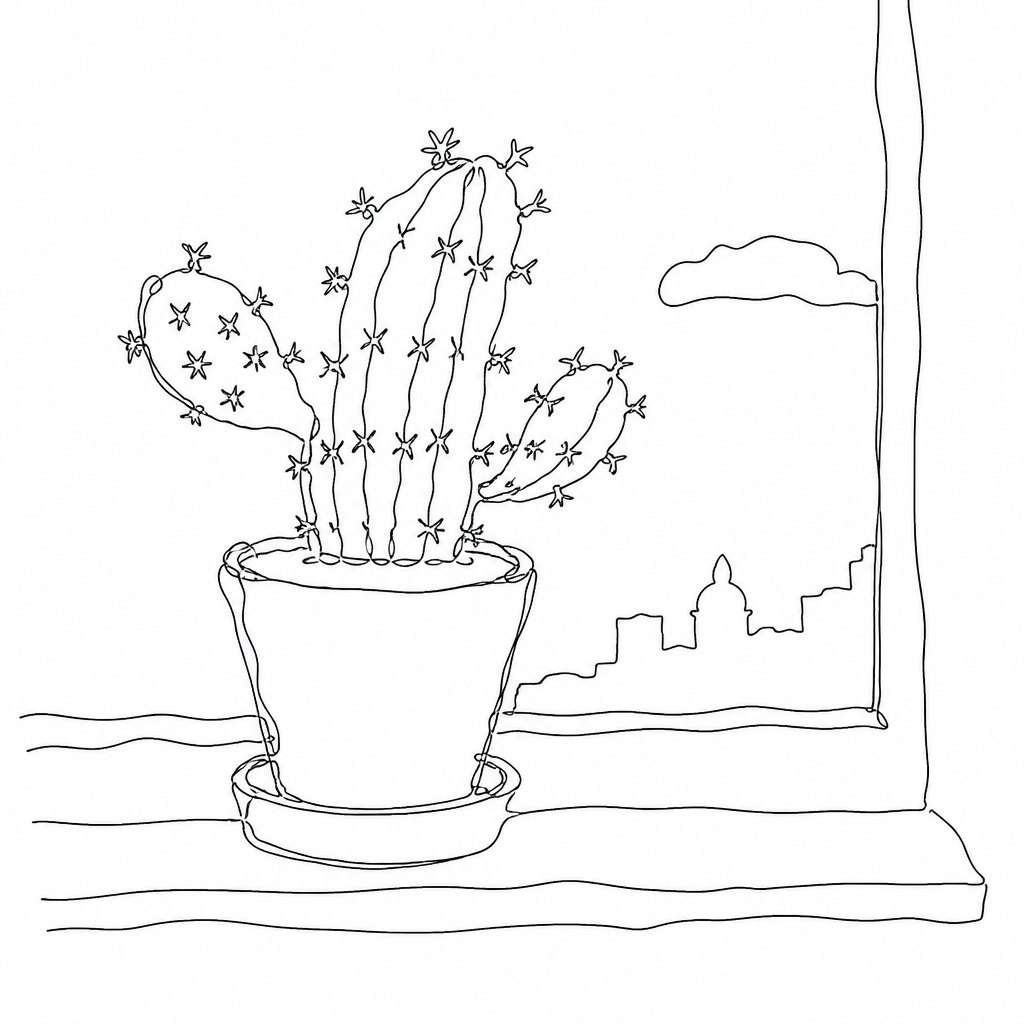 AI-generated
Try it with AI
Get the Contour Drawing look in a generator
To evoke contour drawing, use phrases like 'single continuous line drawing,' 'contour line art,' 'unbroken outline sketch,' or 'minimalist line drawing.' Specify 'no shading' or 'pure line, no fill' so the model doesn't default to rendering tone or texture. Words like 'loose,' 'searching line,' or 'wobbly hand-drawn line' evoke the imperfect, observational quality of blind contour, while 'confident single stroke' or 'clean unbroken contour' evoke a more controlled version. Mentioning 'ink on paper' or 'pen line drawing' as the medium keeps the render flat and linear.
Frequently asked questions
What is contour drawing?
Contour drawing is a technique that renders a subject using continuous line alone, tracing its outer and inner edges with no shading or hatching added.
What is blind contour drawing?
Blind contour is a stricter version where the artist looks only at the subject, never at the paper, forcing the eye to lead the hand in real time.
Why do art teachers assign contour drawing?
It retrains observation — students stop drawing memorized symbols for eyes, hands, or noses and start actually tracing the edges in front of them.
Is a wobbly, imperfect line a mistake?
No — an unsteady line is a normal, even desirable, result of slow, careful looking, especially in blind contour exercises. Smoothness isn't the goal.