 Art
Art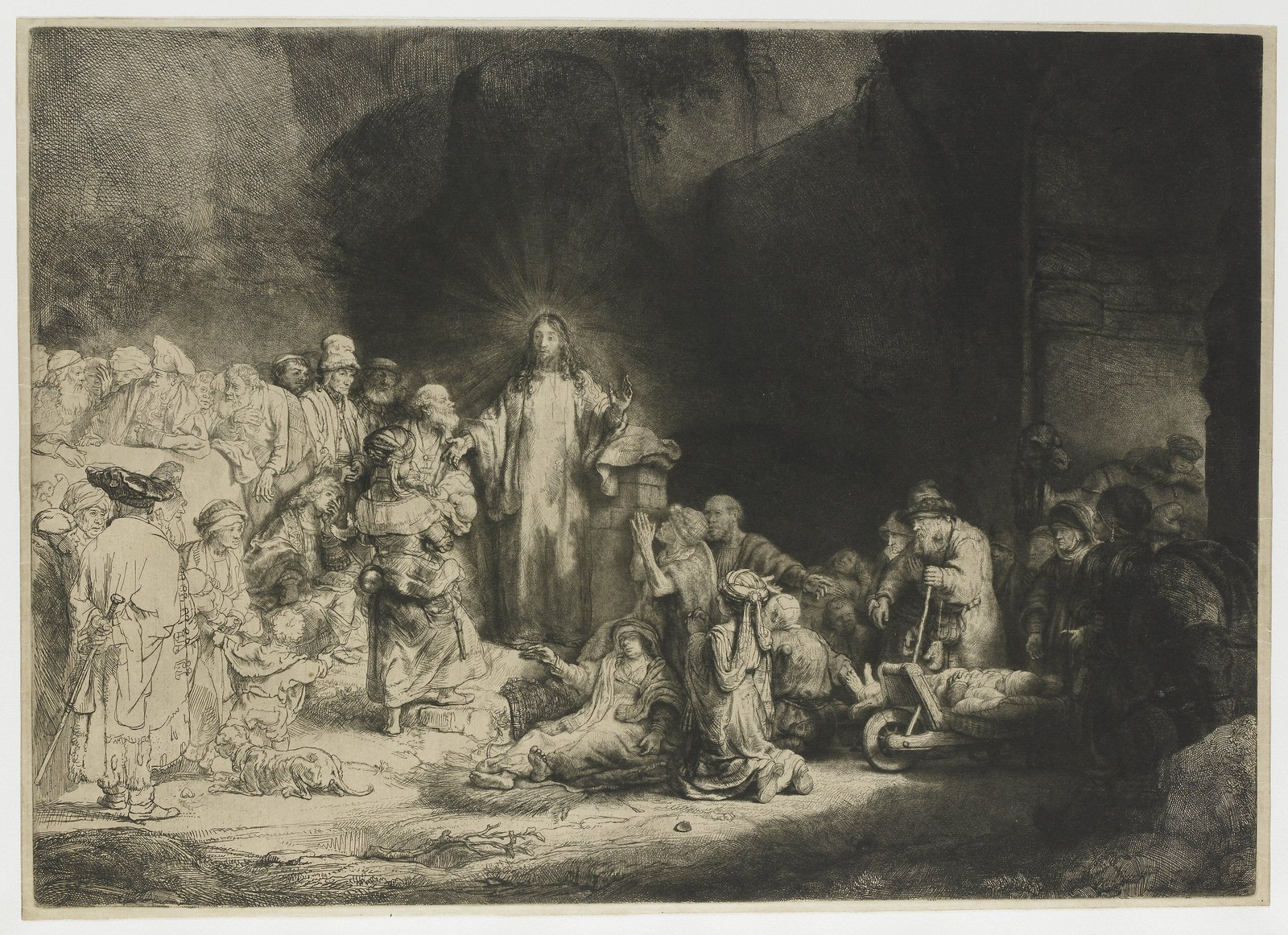
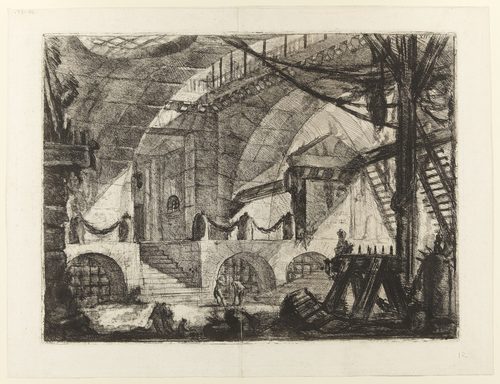
Etching is an intaglio printmaking technique in which a metal plate, usually copper or zinc, is coated with an acid-resistant ground, and the artist draws through that coating with a needle to expose bare metal along the lines of the design. Submerging the plate in an acid bath bites, or etches, those exposed lines into the metal, while the ground protects everything else from the acid, and leaving the plate in longer produces deeper, darker lines. After the ground is cleaned off, ink is worked into the etched grooves and wiped from the flat surface, so ink sits below the surface rather than on top of it, the defining trait of intaglio printing. Because drawing through soft ground feels closer to sketching than to carving, etching allows a freer, more spontaneous line than engraving's direct metal-cutting, while still producing the crisp detail and rich, velvety darks that come from ink pressed deep into bitten grooves under a press.
How to spot it
- 01Fine, freely drawn lines with a slightly sketchy, spontaneous quality
- 02Rich, velvety dark areas from deeply bitten, ink-filled lines
- 03A visible plate mark, the embossed rectangle pressed into the paper
- 04Ink sitting slightly raised on the paper along each line
- 05Crosshatching used to build shadow and tonal depth
The Etching workshop card
days per plate, years to master fullyMaterials
- Copper or zinc plate
- Acid-resistant hard or soft ground
- Etching needles of varied points
- Acid bath (mordant) and safety container
- Etching ink and tarlatan for wiping
- Etching press with felt blankets
- Dampened printmaking paper
- Protective gloves and eyewear
Steps
- 1
Ground the plate
Coat a clean, degreased metal plate evenly with an acid-resistant ground, warming it so the coating spreads into a thin, uniform, protective film with no thin spots or gaps.
- 2
Draw the design
Scratch the composition into the ground with a needle, exposing bare metal along every line. Vary pressure and needle width to plan line weight, since untouched ground stays entirely unetched.
- 3
Bite the plate in acid
Submerge the plate in the acid bath so it bites the exposed lines, timing the bath carefully since longer exposure produces deeper, darker lines and shorter bites give finer, lighter ones.
- 4
Stop out for varied depth
Lift the plate partway through and paint acid-resistant varnish over lines meant to stay faint, then return the plate to the bath so remaining lines bite deeper for a full tonal range.
- 5
Clean off the ground
Remove all remaining ground with an appropriate solvent once biting is finished, exposing the bare bitten plate and checking the depth of the lines before inking.
- 6
Ink and wipe the plate
Work ink into the bitten grooves with a card or dabber, then wipe the flat surface clean with tarlatan, leaving ink only in the recessed lines, ready for printing.
- 7
Print under pressure
Run the inked plate and dampened paper through an etching press together, applying enough pressure to force paper into every bitten line and pick up the ink, leaving a visible embossed plate mark.
- 8
Work with acid safely
Handle acid baths in a ventilated area with gloves and eye protection, and always add acid to water, never the reverse, following the mordant's specific safety guidance.
Classic mistakes
Uneven ground application
A patchy or thin ground lets acid bite unintended areas, producing stray marks called foul biting. Apply ground evenly and check it under raking light before drawing.
Misjudging acid timing
Leaving a plate in too long overbites lines into ragged trenches; too short leaves them too faint to hold ink. Track timing carefully and test-bite scrap plates first.
Wiping the plate unevenly
Inconsistent wiping leaves unwanted ink film in some areas and strips too much from others, producing muddy or overly faint prints. Wipe with even, practiced pressure across the whole plate.
Skipping acid safety precautions
Treating the acid bath casually risks serious injury. Always work ventilated, wear gloves and eye protection, and follow the specific mordant's handling guidance without shortcuts.
Where it comes from
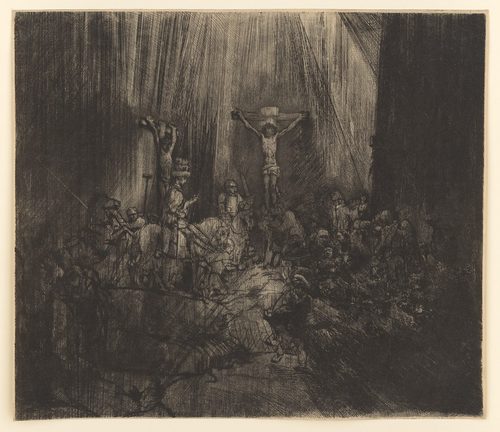
Etching developed in the early sixteenth century, adapted from techniques armorers used to decorate metal, and quickly became attractive to artists because drawing through a soft ground felt closer to sketching than the physical labor of engraving directly into metal. Rembrandt van Rijn pushed the medium's expressive range furthest in the seventeenth century, using varied line depth and rich, atmospheric darks to build mood and light. The technique remained central to printmaking for centuries, later expanded by additional processes like aquatint for broader tonal areas. Etching's relative freedom of line kept it popular among painter-printmakers for reproducing and reinventing their own compositions, and it remains a standard technique taught in printmaking studios today.
See it done perfectly
| Work | Maker | Date | What to look at |
|---|---|---|---|
| Christ Preaching (The Hundred Guilder Print) | Rembrandt van Rijn | circa 1649 | Varied line depth and rich darks show etching's full atmospheric and tonal range. |
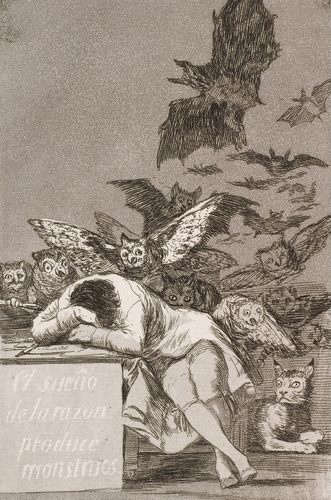
| Los Caprichos | Francisco Goya | 1799 | A series of etchings, some combined with aquatint, using biting satire and nightmarish imagery. |
| Black Lion Wharf | James McNeill Whistler | 1859 | Fine, freely drawn etched lines document London's working riverside docks in intimate detail. |
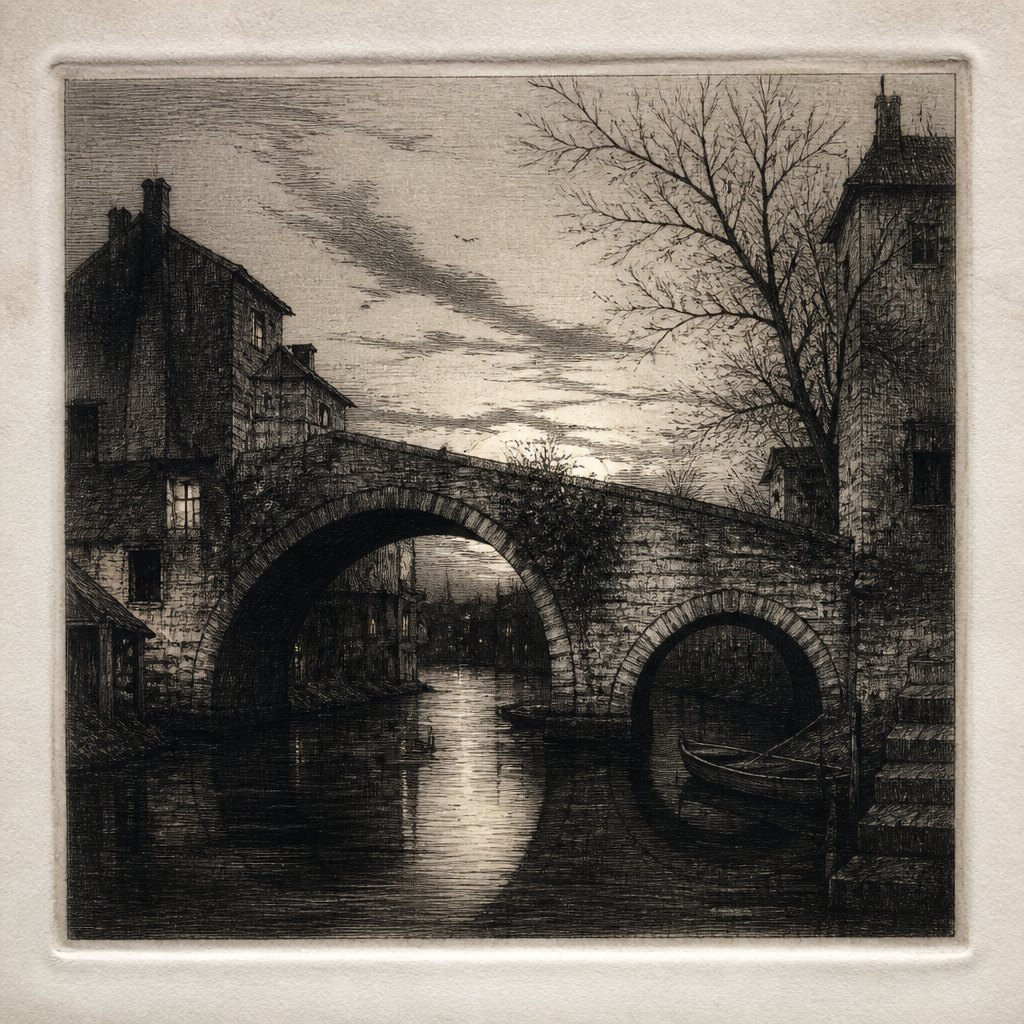 AI-generated
Try it with AI
Get the Etching look in a generator
To suggest this technique, describe fine, freely drawn lines combined with rich, velvety dark areas and a visible embossed plate edge around the image. Useful vocabulary: intaglio line work, bitten metal-plate lines, crosshatched shadow, velvety ink darks, fine needle-drawn quality, visible plate mark border, printmaker's linework, sketch-like spontaneity. Emphasizing varied line weight, from faint to deeply bitten dark, helps capture etching's characteristic tonal range better than uniform line thickness or flat digital shading would.
Frequently asked questions
What is etching?
Etching is an intaglio printmaking technique where a needle draws through an acid-resistant coating on a metal plate, and acid bites those exposed lines into the metal to hold ink for printing.
What is the difference between etching and engraving?
Etching uses acid to bite lines drawn through a protective ground, while engraving cuts lines directly into the metal with a tool, giving engraving a harder, more mechanically precise line quality.
Why do etchings have a raised rectangular border?
That embossed rectangle, called the plate mark, comes from the edge of the metal plate pressing into damp paper under the press, and it is considered a mark of an authentic intaglio print.
Is etching dangerous to do at home?
Working with acid baths requires real caution, ventilation, and protective gear, so many artists use etching studios with proper safety setups rather than working with acid in an unequipped home space.