 Art
Art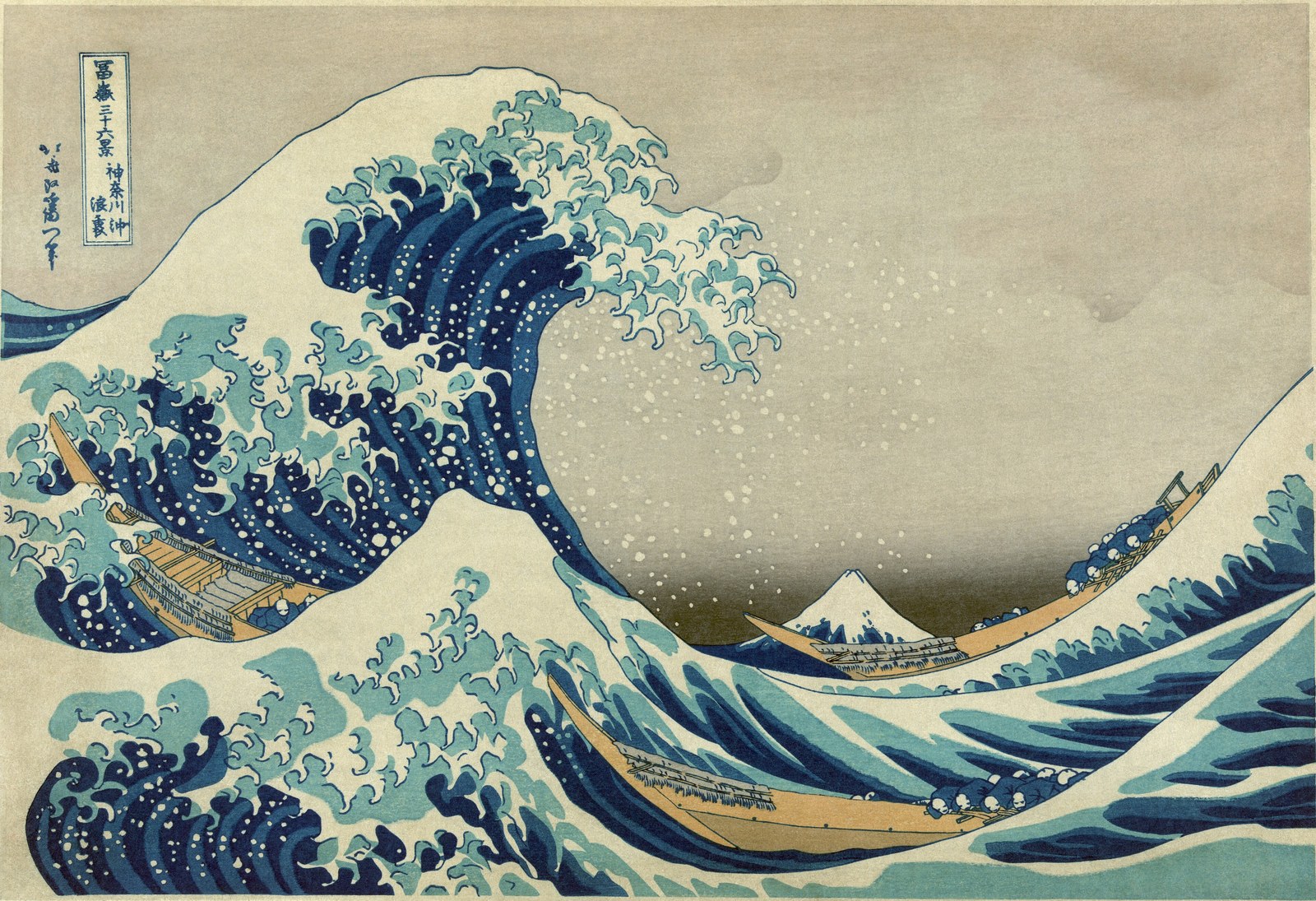
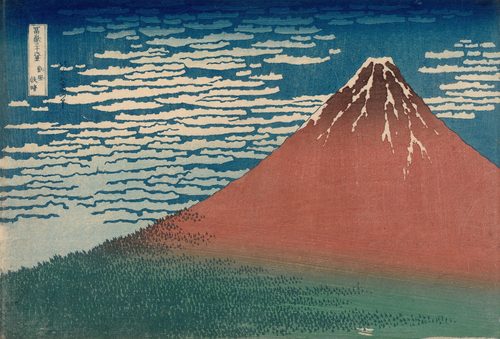
Woodcut is a relief printmaking technique in which an artist carves a design into a block of wood, cutting away every area meant to stay blank while leaving the design itself raised on the surface. Ink rolled across the block sits only on those raised, uncarved areas, so pressing paper against it transfers the design in reverse. Because the carving removes material rather than adding it, the process is essentially subtractive and irreversible, which pushes woodcut toward bold, simplified shapes and strong contrasts between carved-away white and inked black rather than fine, delicate gradation. Multiple blocks, each inked in a different color and printed in careful registration over the same sheet, allow full-color woodcuts, a method perfected in Japanese ukiyo-e printmaking. The technique's resistance, the visible grain and occasional splintering of the wood itself, and the physical effort of cutting all show up as texture in the finished print, giving woodcut a raw, graphic character distinct from smoother printmaking methods.
How to spot it
- 01Bold, simplified shapes with strong black-and-white contrast
- 02Visible wood grain texture running through printed areas
- 03Slightly rough, splintered edges along carved lines
- 04Flat, unmodulated areas of color rather than smooth gradients
- 05Registration lines where multiple color blocks nearly align
The Woodcut workshop card
days for a simple print, longer for colorMaterials
- Plank wood block or plywood panel
- Woodcut gouges and knives in varied profiles
- Bench hook or clamp to hold the block steady
- Relief printing ink, oil- or water-based
- Brayer for rolling ink onto the block
- Baren or printing press for transferring the image
- Printmaking paper suited to relief printing
Steps
- 1
Draw the design in reverse
Sketch or transfer the composition onto the block, remembering that whatever is printed will appear mirror-reversed from the design, so text and asymmetrical images need flipping first.
- 2
Carve away the negative space
Use gouges to remove wood from every area meant to stay unprinted, working carefully along the grain to avoid unwanted splitting, and leaving the design itself standing raised.
- 3
Vary the cut for line quality
Switch between broad gouges for large clearing and fine knives for crisp detail, since the width and angle of each tool directly shapes the character of the final printed line.
- 4
Test print early
Pull a rough proof once the major shapes are carved to check the composition and value balance before committing to fine detail, since carving mistakes cannot be undone.
- 5
Ink the block evenly
Roll ink across the raised surface with a brayer until it forms a thin, even, tacky film, checking that no ink pools in the carved recesses where it would print unwanted marks.
- 6
Print with even pressure
Lay paper over the inked block and burnish with a baren or run it through a press, applying firm, even pressure across the entire surface to transfer ink cleanly.
- 7
Register additional color blocks
For multi-color prints, align each successive block carefully against registration marks before printing, since even small shifts throw off how the colors interlock on the final sheet.
Classic mistakes
Carving against the grain carelessly
Cutting against the wood's grain direction risks splitting off chunks unpredictably. Learn the block's grain direction first and adjust gouge angle and pressure accordingly.
Forgetting the mirror reversal
Carving a design exactly as drawn, without flipping it, prints backward, which ruins any lettering or asymmetrical composition. Always transfer or draw the design in reverse.
Applying too much ink
Overloading the brayer floods carved recesses and prints unwanted texture in areas meant to stay white. Roll ink to a thin, even, slightly tacky film before printing.
Rushing the first cuts
Removing too much wood too fast makes fine detail impossible to recover later, since carving is subtractive and irreversible. Cut conservatively and test-print before committing to final detail.
Where it comes from
Woodblock printing began in East Asia over a thousand years ago for reproducing text and Buddhist imagery, long before it reached Europe. European woodcut flourished in the fifteenth and sixteenth centuries, driven by the rise of the printing press, with Albrecht Dürer elevating the medium's detail and expressive range far beyond earlier folk prints. In Japan, the ukiyo-e tradition of the Edo period developed elaborate multi-block color printing, using separate carved blocks for each color pressed in precise registration, reaching a peak with artists like Katsushika Hokusai. German Expressionist artists in the early twentieth century revived woodcut's raw, high-contrast character for its emotional bluntness, a quality that keeps the technique popular among printmakers today.
See it done perfectly
| Work | Maker | Date | What to look at |
|---|---|---|---|
| The Great Wave off Kanagawa | Katsushika Hokusai | circa 1831 | Multi-block color woodcut with a famously bold, curling wave and crisp registration between colors. |
| The Four Horsemen of the Apocalypse | Albrecht Dürer | 1498 | Bold, densely worked woodcut from the Apocalypse series, far beyond typical folk-print roughness. |
| Rhinoceros | Albrecht Dürer | 1515 | A famously inaccurate but widely copied woodcut of an armored rhinoceros Dürer never saw firsthand. |
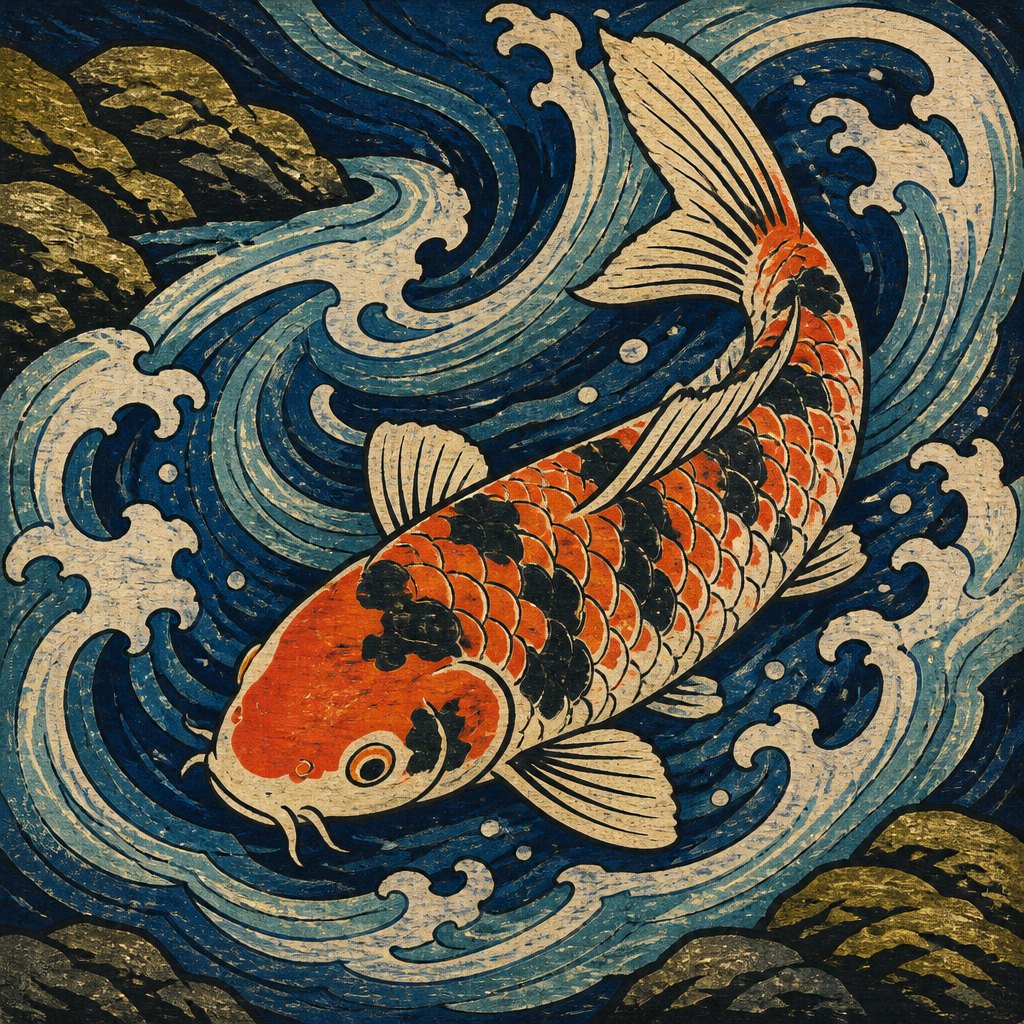 AI-generated
Try it with AI
Get the Woodcut look in a generator
To suggest this technique, describe bold, high-contrast shapes with visible wood-grain texture and slightly rough, carved edges rather than smooth lines. Useful vocabulary: relief print texture, carved woodblock lines, bold flat color areas, visible grain pattern, rough-hewn edges, strong black-and-white contrast, hand-printed registration, layered block-printed color. Naming a limited color palette printed in flat, unmodulated layers helps evoke the multi-block color-printing look rather than smooth painted gradients or soft digital shading.
Frequently asked questions
What is a woodcut?
A woodcut is a relief print made by carving a design into a wood block, cutting away every area meant to stay blank, then inking and printing from the raised, uncarved surface.
What is the difference between a woodcut and an engraving?
Woodcut is relief printing, where raised areas hold ink; engraving is intaglio, where ink sits in cut grooves below the surface. The two produce very different line qualities and require different presses.
Can woodcuts be printed by hand without a press?
Yes. A baren or the back of a wooden spoon can burnish paper against an inked block by hand, though a press gives more even, consistent pressure across larger prints.
How many prints can one woodblock make?
A well-carved wood block can yield hundreds of prints before the fine detail wears down, though print quality and crispness gradually decline as the block's edges soften with repeated use.