 Art
Art
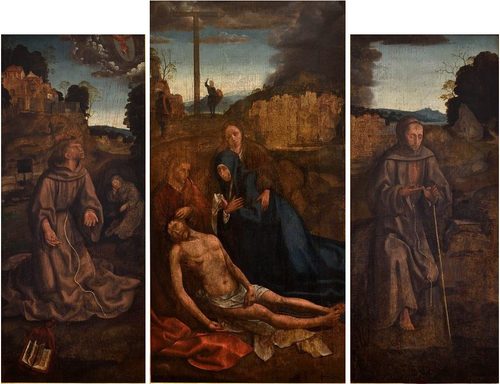
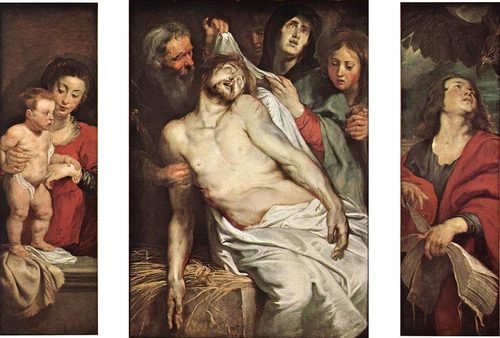
Foreshortening is the technique of drawing an object compressed along its length so it appears to extend directly toward or away from the viewer, rather than sideways across the picture plane. When an arm points at the viewer, its true length gets visually compressed into a shape far shorter and wider than the arm actually is—the drawing shows what the eye sees, not what the mind knows to be true.
Artists reach for foreshortening whenever a pose or object needs to feel like it's breaking into the viewer's space: an outstretched hand, a reclining figure, a cannon aimed at the camera. It is one of the hardest drawing skills to master because it fights the brain's habit of drawing things at their known length rather than their apparent one. Mastering it requires careful observation of overlapping planes, cast shadow, and how forms telescope into one another, since line alone often fails to convey the compression convincingly.
How to spot it
- 01A limb or object that looks unnaturally short and wide
- 02Overlapping forms stacked toward the viewer like a telescope
- 03Strong perspective applied to a body part rather than a building
- 04Heavy shading used to separate compressed, overlapping planes
- 05A pose that seems to lunge or reach out of the frame
The Foreshortening workshop card
Months of life drawing to see it accuratelyMaterials
- large newsprint or drawing paper for full-figure studies
- soft graphite or charcoal for quick tonal blocking
- a model or reference posed at a dramatic angle
- vine charcoal for loose gesture marks
- kneaded eraser for lifting highlights
- mirror or camera for checking proportion from a fixed viewpoint
Steps
- 1
Fix a single viewpoint
Choose one exact position to draw or photograph from and don't move. Foreshortening only reads correctly from the specific angle it was observed at, so any shift ruins the comparison.
- 2
Measure apparent, not actual, length
Compare what you see against a pencil held at arm's length rather than relying on what you know the object's true proportions to be. The compressed shape will look shorter than logic suggests.
- 3
Block in overlapping ovals
Simplify cylindrical forms like limbs into stacked ovals that overlap as they recede, which helps track how much each segment compresses toward the vanishing form.
- 4
Use edges to show depth
Let the outline of a form curve and overlap itself rather than stretching in a straight line, since overlapping contour is often what sells the illusion of depth.
- 5
Shade to separate the planes
Add value changes at each point where one compressed segment overlaps the next, since line alone struggles to communicate which part is closer to the viewer.
- 6
Check with a flipped view
Step back, flip the drawing, or view it in a mirror to catch length or angle errors your eye has gotten used to while working close up.
Classic mistakes
Drawing at the object's known length
Defaulting to how long an arm 'really is' instead of how short it looks from this angle is the single most common foreshortening error. Trust the observed shape over memory.
Skipping the overlap cues
Leaving out the subtle shadows and edges where one form passes in front of another flattens the compression and makes the form read as merely short, not foreshortened.
Changing viewpoint mid-drawing
Shifting position, even slightly, changes the exact compression you're trying to capture. Lock your viewpoint before starting and return to precisely the same spot for every session.
Where it comes from
Foreshortening challenged artists long before perspective theory formalized depth in architecture, since a convincingly compressed figure relies on observation and anatomical understanding as much as geometry. Renaissance artists treated it as a virtuoso skill, a way to prove total command of the human form—Andrea Mantegna's dramatically foreshortened figures in the late 1400s became a benchmark for the effect, and later ceiling painters used extreme foreshortening so figures overhead would read correctly from far below. The technique remained a staple of academic figure training for centuries, prized in life-drawing classes as proof that a student could draw what the eye actually sees rather than a stock, sideways silhouette. It is still considered one of the more advanced tests of observational drawing skill today.
See it done perfectly
| Work | Maker | Date | What to look at |
|---|---|---|---|
| Lamentation over the Dead Christ | Andrea Mantegna | c. 1480 | An extreme, famous foreshortened figure viewed from the feet, a benchmark demonstration of the technique. |
| Sistine Chapel ceiling | Michelangelo | 1508–1512 | Figures foreshortened so they read correctly to viewers standing far below on the chapel floor. |
| Assumption of the Virgin dome fresco | Correggio | 1520s–1530 | Figures wildly foreshortened to seem tumbling overhead when viewed from directly below the dome. |
 AI-generated
Try it with AI
Get the Foreshortening look in a generator
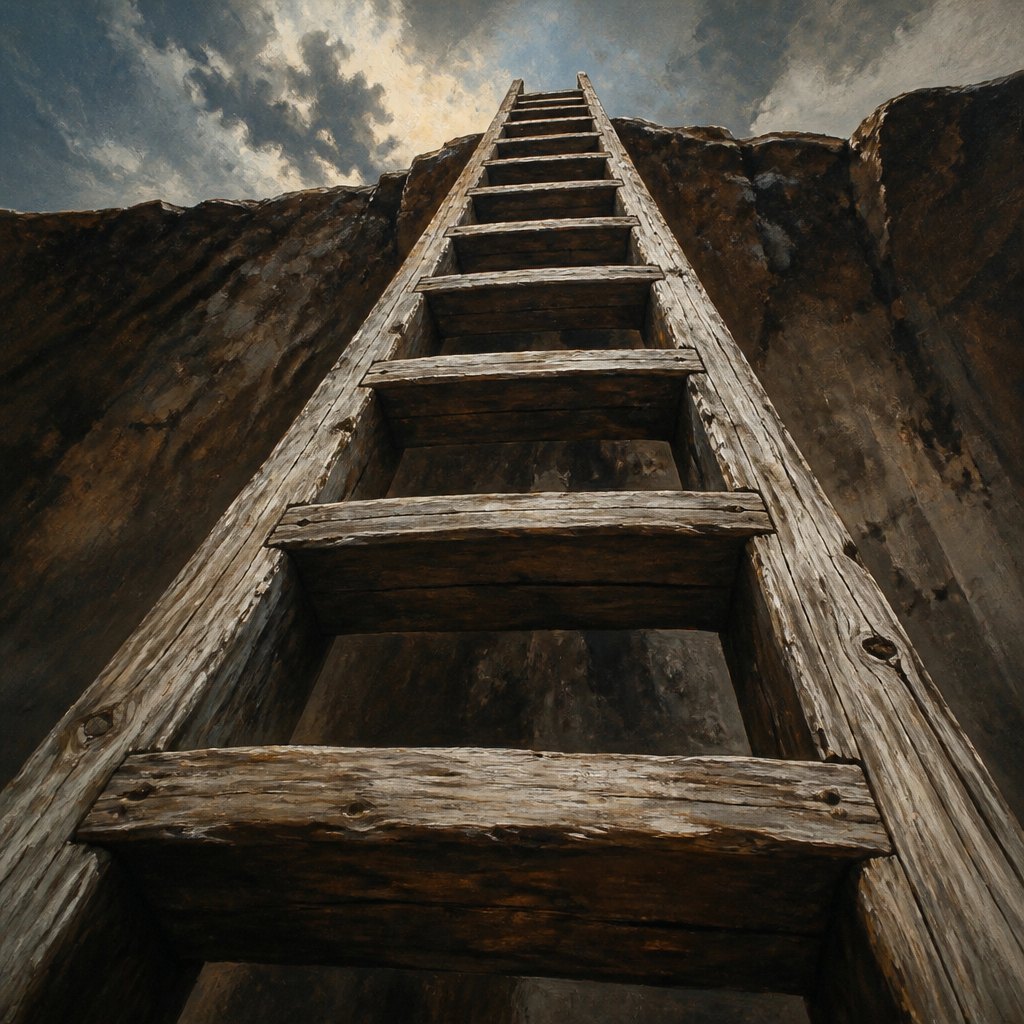
To get convincing foreshortening from an AI generator, describe the camera angle and compression directly: 'dramatic foreshortening,' 'low camera angle,' 'looking up from below,' or 'object extending toward viewer.' Terms like 'wide-angle lens distortion' and 'compressed perspective' push the model toward exaggerated depth cues. Naming the specific overlap—'overlapping forms receding into distance'—helps reinforce the effect. Avoid flat, side-on framing words like 'profile view,' which actively work against the compression that defines foreshortening.
Frequently asked questions
What is foreshortening?
Foreshortening is a drawing technique that compresses an object along its length so it appears to project toward or recede away from the viewer, showing its apparent shape rather than its actual proportions.
Why is foreshortening considered so difficult?
It requires ignoring what you know about an object's true length and drawing only what your eye observes from a fixed angle, which fights against the brain's instinct to draw familiar, expected shapes.
Is foreshortening only used for the human body?
No—any object with length, like a car, a cannon, or an outstretched branch, can be foreshortened. It's most discussed in figure drawing because limbs foreshorten dramatically and are hard to get right.
How can I practice foreshortening?
Draw from life with a model or yourself in a mirror, choosing extreme poses—an arm reaching at the camera, a leg kicked forward—and measure apparent length constantly against a pencil held at arm's length.