 Art
Art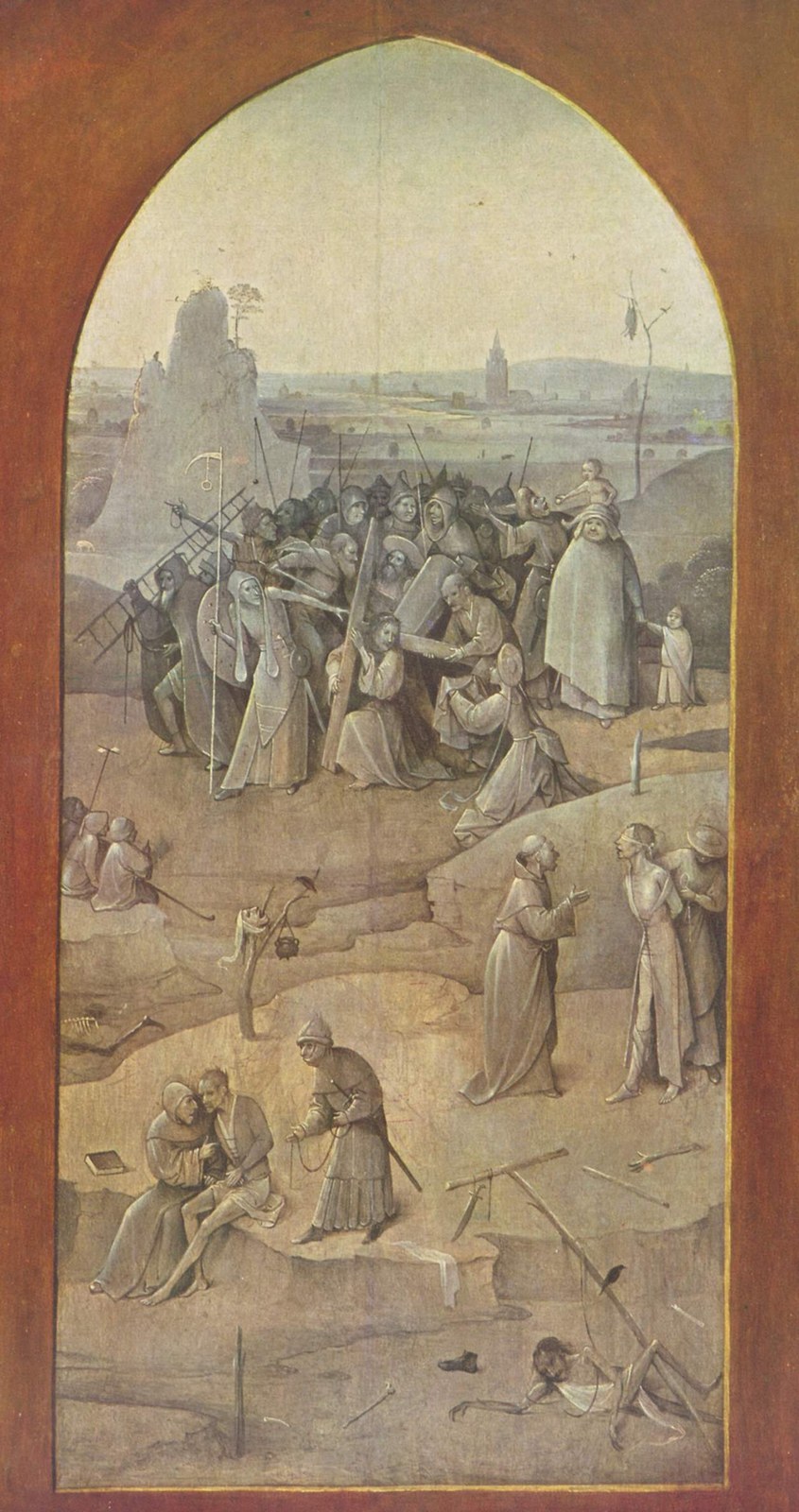
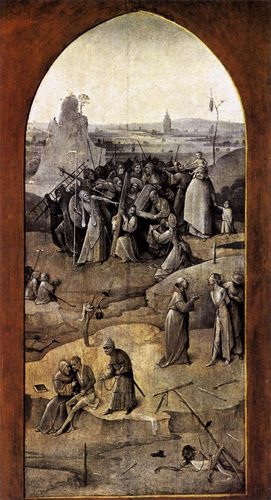
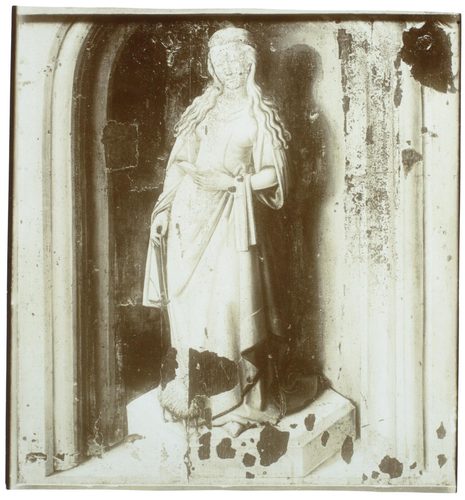
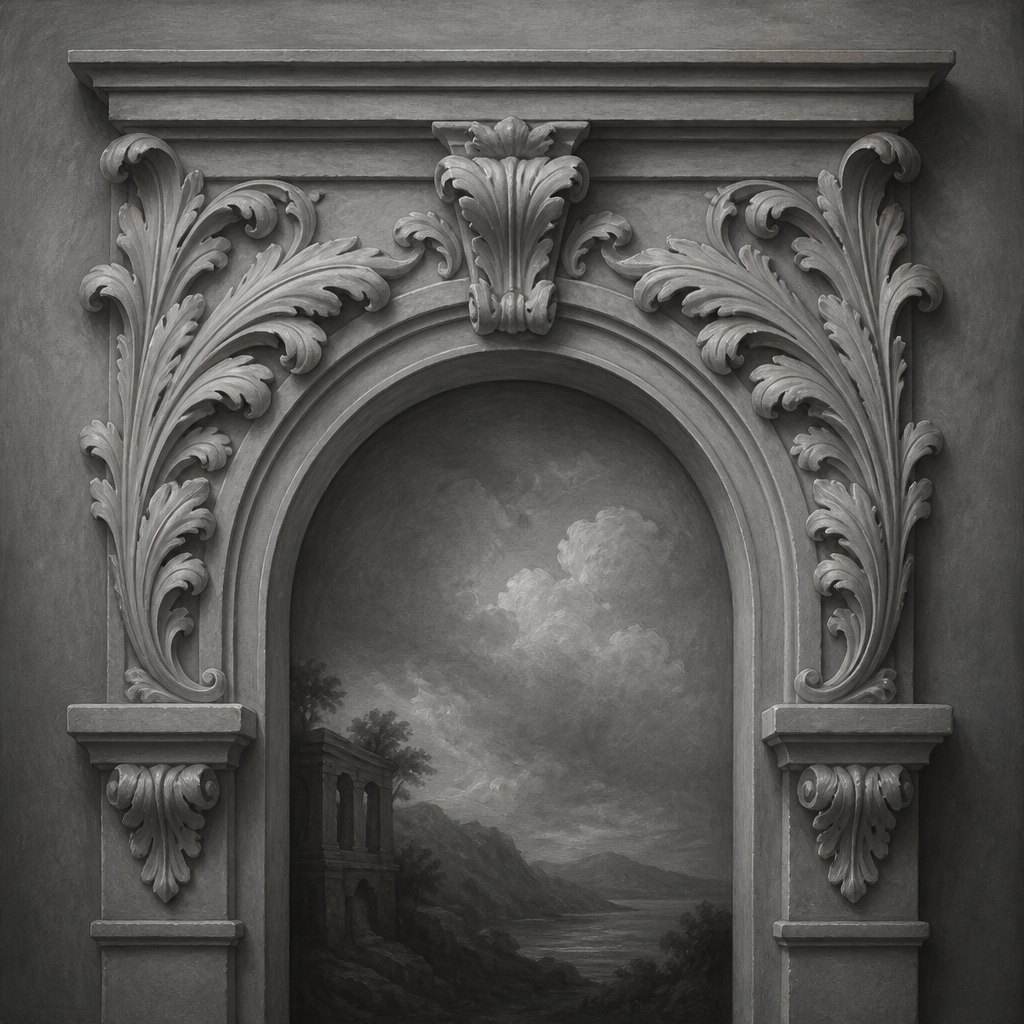
Grisaille is a painting executed entirely in shades of gray, from deep near-black through the full range of middle grays to near-white, with no other color. The name comes from the French gris, for gray. It can stand as a finished work in its own right, often imitating relief sculpture or stone, or it can serve as a monochrome underpainting stage meant to be glazed over with color later.
Because color is removed from the equation entirely, grisaille forces total focus on value: the relative lightness and darkness of every shape, and how those values describe volume, light direction, and form. Painters use it to study or resolve difficult modeling problems — a complex figure, a tricky fold of drapery — without the added complication of color choices. Finished grisailles were also historically used to mimic carved stone reliefs, especially on altarpiece exteriors and architectural decoration.
How to spot it
- 01A painting entirely in grays, from near-black to near-white, with no other hue.
- 02Strong, sculptural modeling of light and shadow that reads almost three-dimensional.
- 03A stony, relief-like quality, sometimes deliberately imitating carved stone.
- 04Crisp value transitions used to describe form rather than color.
- 05Occasionally found on the outside panels of an altarpiece, contrasting with color inside.
The Grisaille workshop card
A focused session to a full paintingMaterials
- ivory black and titanium white
- a warm and cool gray mixed from black, white, and a touch of umber
- flat and filbert brushes for broad value blocking
- a smooth or moderately textured panel or canvas
- painting medium to control paint consistency
- a value scale reference for checking accuracy
Steps
- 1
Mix a value scale first
Before painting, mix a strip of five to seven grays from black to white so you have a consistent reference for matching values as you work.
- 2
Draw the composition carefully
Since color won't be there to help distinguish forms, get the underlying drawing accurate first — every single shape has to read clearly through value alone.
- 3
Block in the darkest shadows
Establish your deepest darks early as flat, simple shapes, without worrying about softening any edges yet. This early move anchors the value range for everything else in the painting.
- 4
Build the mid-value shapes
Fill in the broad mid-tones next, comparing each new shape carefully against your value scale to keep the range consistent across the whole composition and canvas.
- 5
Save the brightest highlight for last
Add your lightest lights only once the rest of the value structure is in place — placed too early, they make everything else look darker than it should read.
- 6
Soften transitions where forms curve
Blend value transitions smoothly across rounded forms like a face or drapery fold, while keeping the edges noticeably crisper wherever the planes change direction sharply.
- 7
Squint to check values
Squint at the painting periodically to see if the value structure still reads clearly — this is the same test that makes grisaille useful as underpainting practice.
Classic mistakes
Too narrow a value range
Sticking to safe middle grays produces a flat, low-contrast image. Push all the way to near-black and near-white for real sculptural punch.
Losing the drawing
Without color to lean on, an inaccurate underlying drawing becomes obvious immediately. Resolve the drawing carefully before blocking in values.
Comparing values in isolation
Judging a value against the canvas edge rather than its neighbors leads to a picture where nothing sits correctly next to anything else. Always compare adjacent shapes.
Adding highlights too early
Placing bright whites before the rest of the value structure is resolved throws off every judgment made afterward. Save the lightest lights for last.
Where it comes from
Grisaille developed in medieval and early Renaissance Northern European painting, where it was used on the closed exterior wings of altarpieces to imitate carved stone statues, saving the full-color drama for the interior panels revealed on feast days. It became a respected technique in its own right, valued for the discipline of describing form and light without any color to lean on. Renaissance and Baroque painters also used grisaille as a preparatory underpainting stage for larger color works, and later it was used for reproductive prints and book illustration, since a monochrome image translated cleanly to engraving. The technique persisted into the 18th and 19th centuries as both a finished decorative style and a training exercise in value control.
See it done perfectly
| Work | Maker | Date | What to look at |
|---|---|---|---|
| Altarpiece exterior wings | Jan van Eyck | 1432 | Grisaille figures of saints on the closed panels of the Ghent Altarpiece imitate carved stone statues. |
| Scrovegni Chapel virtues and vices | Giotto di Bondone | c. 1305 | Monochrome figures painted to imitate stone relief sculpture along the chapel's dado level. |
| Preparatory modelli for engravers | Peter Paul Rubens | early 17th century | Grisaille versions of compositions painted specifically to guide printmakers translating the work into engravings. |
 AI-generated
Try it with AI
Get the Grisaille look in a generator
To generate grisaille in an AI image tool, specify 'grisaille painting,' 'monochrome gray value study,' or 'painted entirely in shades of gray.' Add 'sculptural modeling,' 'stone relief effect,' or 'strong value contrast, no color' to push the model away from any hue. Phrases like 'near-black shadows to near-white highlights' and 'form described through value alone' help lock in the full tonal range that makes grisaille read as convincingly three-dimensional and sculptural.
Frequently asked questions
What is grisaille?
Grisaille is a painting done entirely in shades of gray, from near-black to near-white, with no other color. It's used both as a finished style and as an underpainting stage.
Why paint in only gray?
Removing color forces total focus on value — how light and dark each shape is — which is what actually describes form and light. It's a way to master modeling without color distractions.
Is grisaille the same as underpainting?
They overlap but aren't identical. Underpainting can be any single tone, not just gray, and grisaille can stand alone as a finished gray painting rather than always being covered by color.
Can I do grisaille with any paint?
Yes — oils, acrylics, gouache, and even pencil or charcoal can all produce a grisaille as long as you're working strictly in a black-to-white value range.