 Art
Art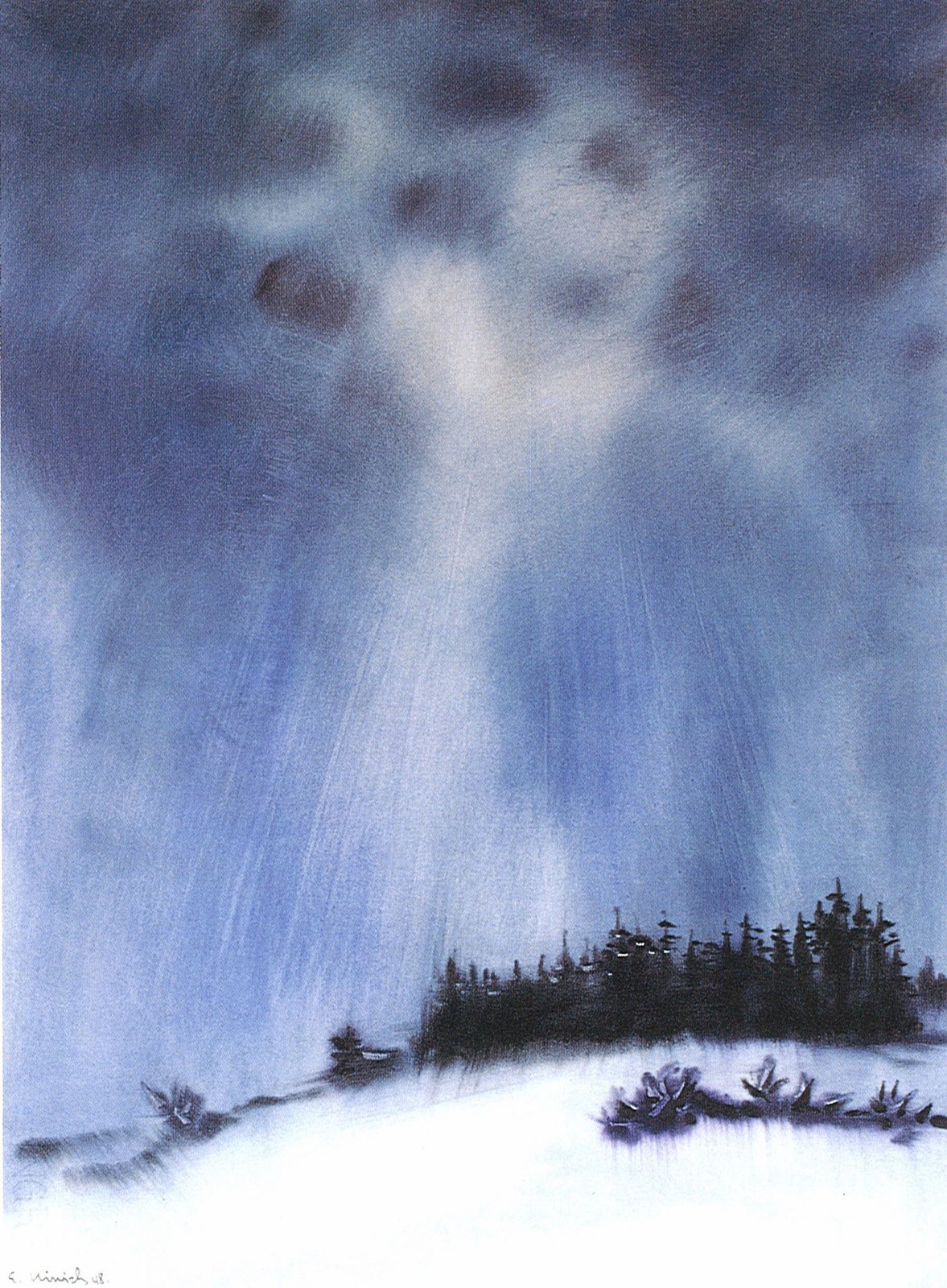
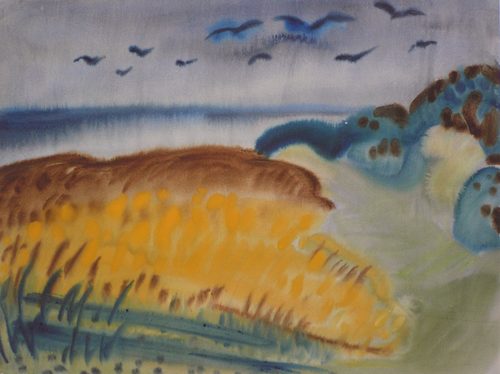
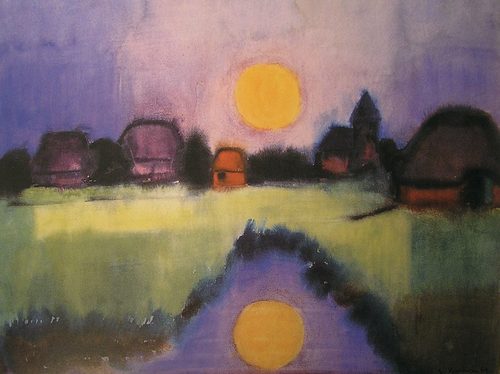
Wet-on-wet is a watercolor technique in which paint is applied to a paper surface that has already been dampened with clean water, rather than onto dry paper. Because the paper is wet, the pigment spreads on its own, diffusing outward in soft, feathered edges instead of staying where the brush first touches down. The water does much of the work, carrying color into unpredictable blooms, gradients, and textures that no amount of brush control could produce on dry paper.
Painters use wet-on-wet for skies, water, fog, foliage, and anything that needs to feel soft-edged and atmospheric — it is the opposite of the crisp, controlled marks of dry-brush work. It rewards a loose, responsive approach: timing matters more than precision, since the same color dropped into paper that's too wet, just-right damp, or nearly dry will behave completely differently. Much of the skill lies in reading the paper's wetness and working with it rather than fighting it.
How to spot it
- 01Soft, feathered edges with no hard outline where colors meet.
- 02Cloud-like blooms or blossoms where pigment settled unevenly as it dried.
- 03Gradual color gradients that shift smoothly with no visible brush lines.
- 04Colors that seem to have mixed themselves rather than been blended by hand.
- 05Occasional soft 'cauliflower' backruns where extra water pushed pigment into odd shapes.
The Wet-on-Wet Watercolor workshop card
Minutes per wash, a lifetime to read waterMaterials
- cold-pressed or rough watercolor paper, at least 140 lb
- soft round watercolor brushes in a few sizes
- clean water in a spray bottle or large jar
- watercolor paints in tube or pan form
- a board or easel that can tilt
- paper towel or natural sponge for lifting excess water
Steps
- 1
Stretch or tape the paper
Secure the paper to a board with tape or a staple stretch so it won't buckle badly once wet. Heavier paper (140 lb or more) handles pooled water without warping too much.
- 2
Wet the paper evenly
Use a clean, wide brush or sponge to lay an even film of water across the area you're about to paint. Avoid puddles in some spots and dry patches in others.
- 3
Check the sheen
Wait until the surface water loses its glossy shine and looks matte-damp before adding pigment — painting into standing water causes uncontrolled pooling instead of a soft bloom.
- 4
Load the brush generously
Use more pigment than feels natural; wet paper dilutes and spreads color fast, so a thin mix will look weak and washed out once it finally settles and dries.
- 5
Touch down and let go
Drop the loaded brush onto the damp paper and let the water carry the color outward on its own. Resist the urge to keep pushing paint around with the brush.
- 6
Tilt the board for direction
Angle the paper slightly to guide how pigment drifts and pools as it dries, which is especially useful for skies where color should settle heavier toward one edge.
- 7
Let it dry undisturbed
Once you like the bloom, step away. Touching a wet passage again, or blasting it with a hair dryer too soon, can disrupt the soft edges you just created.
Classic mistakes
Painting into standing water
Adding pigment while the paper still has a glossy pool of water on it causes uncontrolled backruns instead of a soft, even bloom. Wait for the sheen to turn matte.
Paint mixed too thin
A weak, watery mix nearly disappears once it hits already-wet paper. Load the brush with more pigment than you think you need.
Fighting the bloom
Trying to control exactly where wet-on-wet color goes defeats the purpose of the technique. Let the water do the spreading and work with the results.
Reworking a drying passage
Touching paint that's partway between wet and dry creates hard, blotchy backruns. Either work while fully wet or wait until it's completely dry.
Where it comes from
Wet-on-wet handling is as old as watercolor painting itself, but it became a defining feature of the English watercolor tradition from the late 18th and early 19th centuries, when landscape painters used it to capture skies, mist, and shifting weather with a softness dry techniques couldn't achieve. It let painters suggest atmosphere quickly, working with the paper's natural behavior rather than against it. The approach carried into plein air watercolor work later in the 19th century, prized for capturing fleeting light and weather on location. It remains one of the two foundational watercolor approaches taught today, paired with dry-brush and glazing methods for contrast and control.
See it done perfectly
| Work | Maker | Date | What to look at |
|---|---|---|---|
| Late watercolor studies of sea and sky | J.M.W. Turner | 1820s–1840s | Soft, bled color washes capture storms and light with almost no hard edges. |
| Watercolor landscapes and architectural studies | John Sell Cotman | early 19th century | Broad, flat washes and soft blooms simplify landscape into luminous passages of color. |
| Caribbean and coastal watercolors | Winslow Homer | 1880s–1900s | Loose, bled washes of tropical light and water, painted rapidly outdoors. |
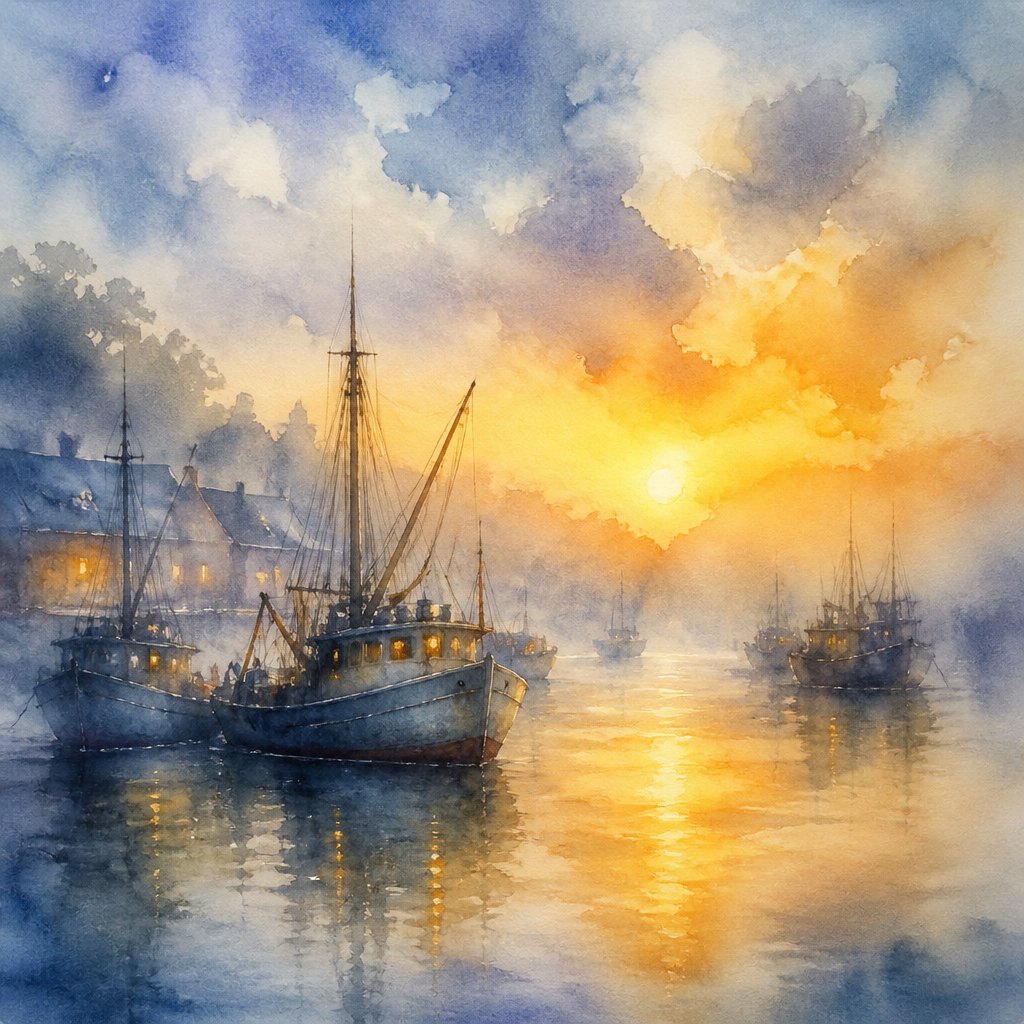 AI-generated
Try it with AI
Get the Wet-on-Wet Watercolor look in a generator
To describe wet-on-wet watercolor to an AI generator, use 'soft bled watercolor washes,' 'feathered edges,' 'diffused pigment blooms,' and 'colors blending into damp paper.' Add 'no hard outlines,' 'atmospheric gradient,' or 'watery blossom textures' to push toward the diffuse, unpredictable look. Mentioning 'wet paper texture' and 'pigment granulation' reinforces the medium. Avoid words like 'crisp' or 'linework,' which pull toward drier, more controlled watercolor or ink styles instead of the soft-edged bleed this technique produces.
Frequently asked questions
What is wet-on-wet in watercolor?
Wet-on-wet means applying paint to paper that's already damp with clean water, so the pigment spreads and blends on its own into soft, feathered shapes instead of staying where the brush touches.
How wet should the paper be?
Damp with a matte sheen, not glossy with standing water. Too wet causes uncontrolled pooling; too dry and the paint behaves like it's on dry paper instead of blooming.
What causes those cauliflower blotches?
Those 'backruns' happen when extra water or wet paint touches a passage that's partly dried, pushing pigment into hard-edged, blossom-like shapes. They can be a happy accident or an unwanted flaw depending on control.
Is wet-on-wet only for watercolor?
The principle applies to any water-based medium, including gouache and ink washes, and a version of it exists in oils as 'wet-into-wet,' though the physics of how the paint spreads differs.