 Art
Art
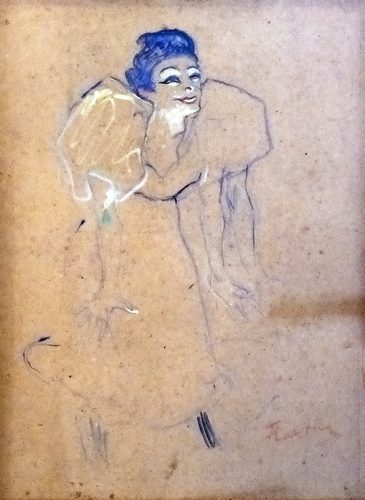
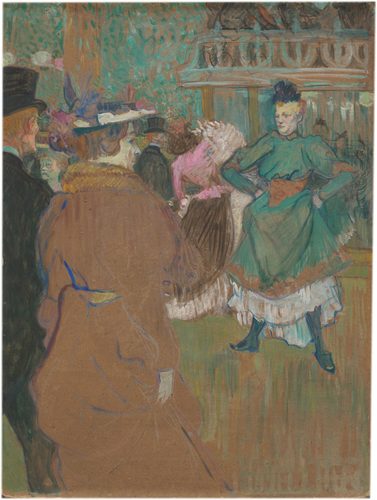
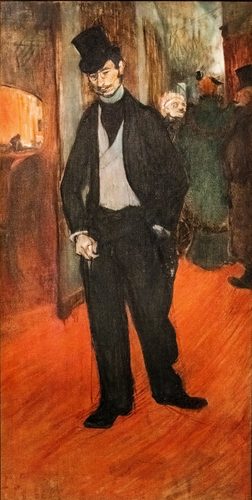
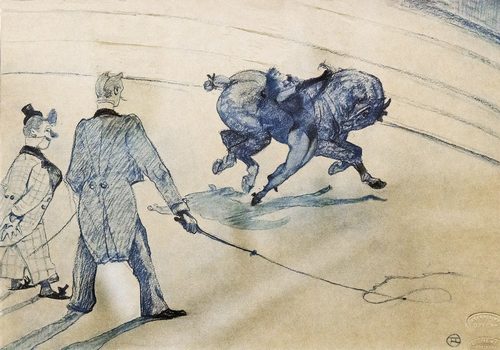
Lithography is a printmaking technique based on the principle that grease and water do not mix. The artist draws directly onto a flat, grained limestone slab or treated metal plate using a greasy crayon, pencil, or liquid ink, then chemically treats the surface so the drawn areas accept oily printing ink while the untouched areas hold water and repel it. Unlike engraving or etching, nothing is physically cut or bitten into the surface—the image sits purely on the plane, which lets lithography reproduce the full range of a drawn mark, from soft crayon shading to fine pen line, with unusual fidelity. Artists reach for lithography when they want the direct, immediate feel of drawing translated faithfully into a multiple, and its capacity for subtle tonal gradation made it ideal for posters, illustration, and fine-art editions alike. It remains one of the most drawing-like of all print processes.
How to spot it
- 01Soft, crayon-like textures and smooth tonal gradations, closer to drawing than engraving
- 02No embossed platemark, since lithography prints from a flat surface, not a cut one
- 03Rich, grainy blacks that look like dense pencil or crayon shading
- 04Flat color areas in poster lithographs, often with visible registration between colors
- 05A drawn, spontaneous quality—lines and marks that look like they came straight from the hand
The Lithography workshop card
weeks to learn, years to master fullyMaterials
- grained limestone slab or grained aluminum plate
- greasy lithographic crayons and tusche ink
- gum arabic and etch solution
- asphaltum for staying-power
- oil-based lithographic ink
- leather roller (brayer)
- dampened printmaking paper
- flatbed lithography press
Steps
- 1
Grain the stone
Sand the limestone surface evenly with abrasive grit and water until it holds an even, fine tooth that will grip both grease and water alike.
- 2
Draw the image
Work directly on the stone with greasy crayon or brush-applied tusche, building tone the way you would on paper, since every single mark will print.
- 3
Fix the drawing chemically
Treat the surface with a gum arabic and etch solution so the drawn areas bond with grease and the blank areas become receptive to water.
- 4
Wash out the drawing
Remove the visible crayon or ink with solvent—work ventilated and gloved, since litho solvents and the acidified etch are hazardous—leaving an invisible greasy ghost image fixed into the stone.
- 5
Dampen and roll up
Sponge the stone with water so the blank areas repel ink, then roll oil-based ink across the surface so it clings only to the greasy image.
- 6
Print under the scraper bar
Run the stone and dampened paper together through a flatbed press, where a scraper bar applies even, dragging pressure to transfer the fully inked image.
- 7
Repeat for color layers
For color lithographs, prepare a completely separate stone or plate for each individual color, then print them all in careful registration, one layer over another.
Classic mistakes
Uneven graining
A poorly or unevenly grained stone holds grease and water inconsistently, causing patchy, unreliable printing across the whole finished image.
Touching the drawn surface
Skin oils from bare hands can grease areas meant to stay blank, so keep hands clean and use a hand rest.
Under-dampening the stone
Too little water on the stone lets ink creep into blank areas, muddying fine detail and flattening overall tonal contrast.
Rushing the chemical fix
Skipping or shortening the gum arabic etch step leaves the image unstable, so it can fade or blur after only a few pulls.
Where it comes from
Lithography was invented in the 1790s by Alois Senefelder in Bavaria, who discovered that a greasy drawing on limestone could be chemically fixed and printed using water and oil-based ink. It spread quickly across Europe in the nineteenth century as a fast, versatile way to print both fine art and commercial material, and its capacity for flat color layering made it central to the poster boom of late-nineteenth-century Paris. Artists valued lithography for letting them draw directly on the printing surface without an engraver's translation, and the technique became a favorite of major modern painters working in print. Offset lithography, developed in the early twentieth century, later became the dominant commercial printing method worldwide, while hand-drawn stone lithography survives today as a fine-art specialty.
See it done perfectly
| Work | Maker | Date | What to look at |
|---|---|---|---|
| Moulin Rouge: La Goulue | Henri de Toulouse-Lautrec | 1891 | Flat, bold color lithography that helped define the Parisian poster as an art form. |
| The Bulls of Bordeaux | Francisco Goya | 1825 | One of the earliest major fine-art lithograph series, using crayon's soft tonal range. |
| Relativity | M.C. Escher | 1953 | Demonstrates lithography's fine tonal control in an impossible architectural scene built from soft crayon shading. |
 AI-generated
Try it with AI
Get the Lithography look in a generator
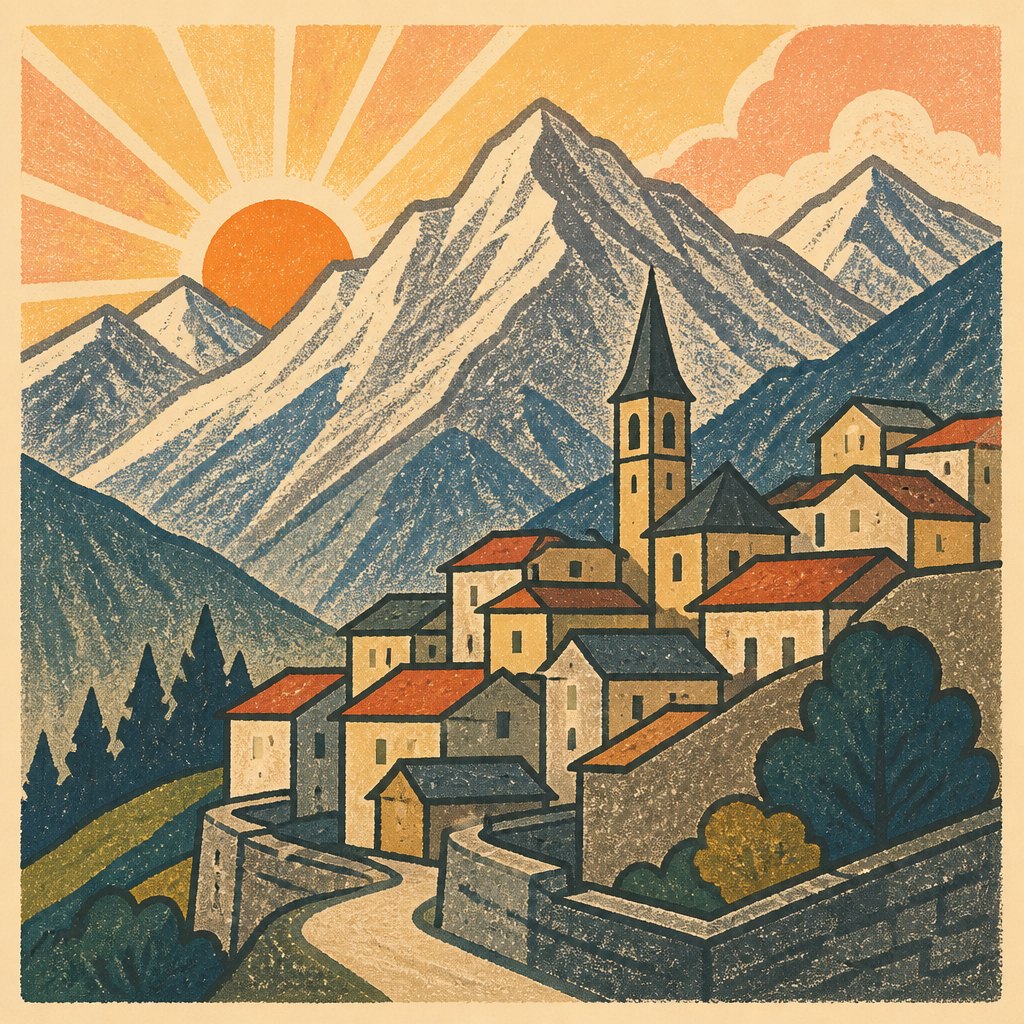
To suggest lithography in an AI prompt, emphasize drawn, crayon-like texture: 'soft crayon shading,' 'grainy tonal drawing,' or 'chalky textured linework.' Ask for a hand-drawn, sketch-like quality with smooth tonal gradation rather than hard vector edges. For poster-style lithography, request 'flat bold color blocks' and 'bold outlined shapes' reminiscent of vintage printed posters. Words like 'stone-printed texture,' 'soft grain,' and 'hand-drawn poster' help steer the look. Avoid describing embossed or raised texture, since lithography prints from a flat surface with no physical indentation.
Frequently asked questions
What is lithography?
Lithography is a printmaking technique that uses the chemical repulsion between grease and water. The artist draws on stone or plate with greasy crayon, then prints from the flat surface using oil-based ink and water.
Why does lithography look so much like drawing?
Because nothing is carved or etched away, lithography reproduces the full texture of a crayon or pen mark directly, unlike engraving or etching, which translate the mark into cut or bitten lines.
Is lithography the same as offset printing?
Offset lithography, used in commercial printing, works on the same grease-and-water principle but transfers the image via a rubber roller rather than directly to paper by hand.
Can lithography be done without a heavy stone?
Yes—grained aluminum or zinc plates work the same way as stone and are lighter and more practical for many contemporary printmakers.