 Art
Art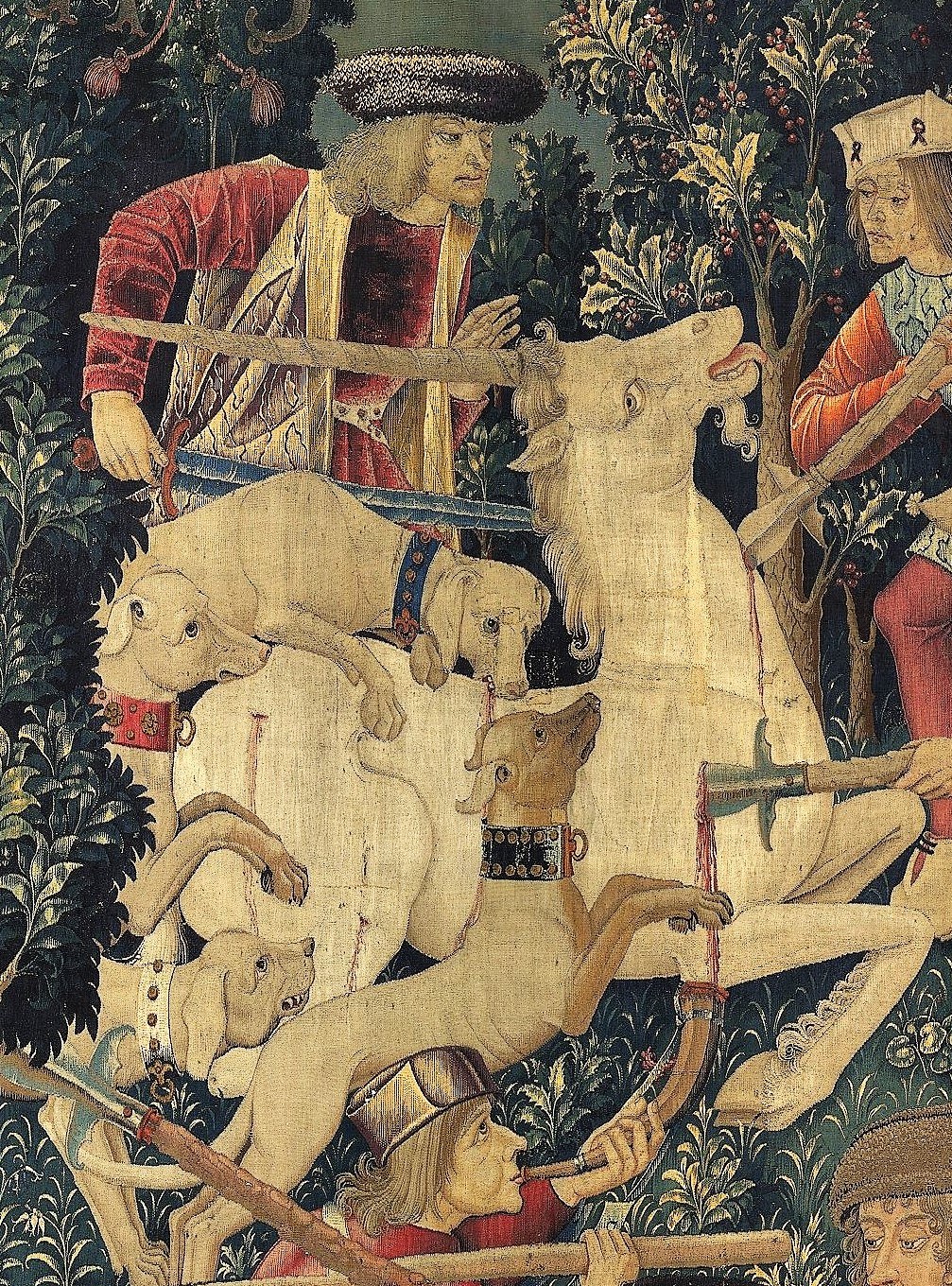
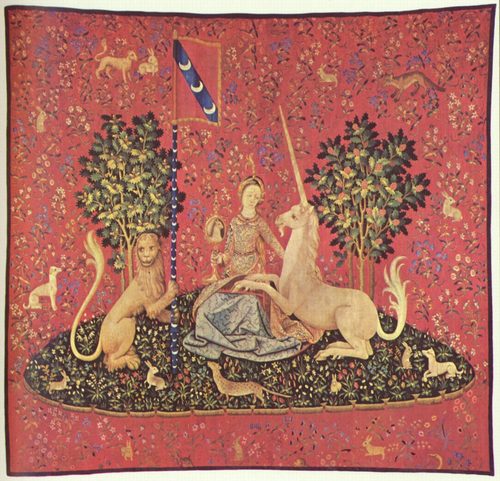
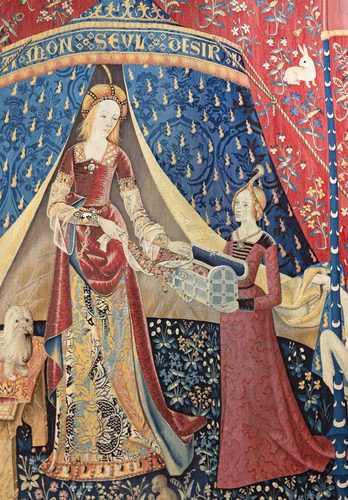
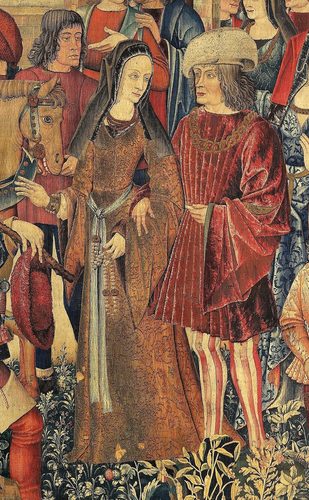
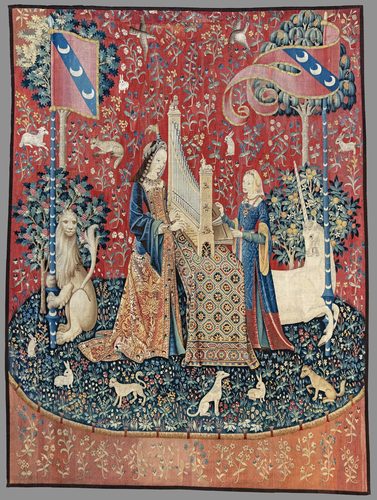
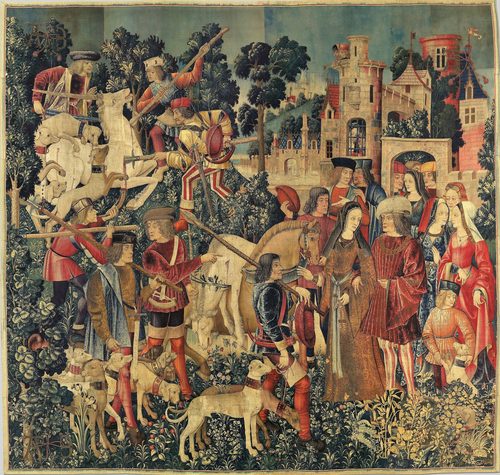
Tapestry weaving is a hand-weaving technique that builds pictorial images directly into cloth by interlacing colored weft threads back and forth across a fixed set of vertical warp threads, stopping and starting each color only where the design calls for it. Unlike embroidery, which adds stitches to finished fabric, tapestry weaving creates the image and the structural cloth simultaneously — there's no surface separate from the picture. Weavers work from the back or front of a loom, following a cartoon, a full-size design pinned or drawn behind the warp, building color areas up row by row and interlocking or slit-joining adjacent colors where they meet. Artists reach for tapestry because it produces monumental, durable images — hangings that can cover entire walls — with a matte, richly textured surface unlike painting or print. It has served as portable, insulating wall decoration and grand pictorial storytelling for large architectural spaces for centuries.
How to spot it
- 01A ribbed, horizontally textured surface from the woven weft rows, visible up close.
- 02Small diagonal slits or dovetailed joins where two color areas meet.
- 03Matte, densely woven color fields with no sheen, unlike painted or printed surfaces.
- 04Large-scale hangings sized to cover a wall, often with wide decorative borders.
- 05Color transitions that step diagonally rather than blending smoothly, following the weave grid.
The Tapestry Weaving workshop card
weeks per panel, years to master figuresMaterials
- upright or floor loom
- warp thread (strong, tightly spun wool or cotton)
- colored weft yarns, often wool or silk
- shuttle or bobbins for weft
- beater or comb for packing rows
- full-size cartoon design
- tapestry needle for finishing joins
Steps
- 1
Warp the loom
String strong warp threads under even tension from top to bottom of the loom; consistent warp tension determines how evenly the finished weave will lie.
- 2
Position the cartoon
Set the full-size cartoon design behind or beneath the warp threads as a constant visual guide for exactly where each color begins and truly ends.
- 3
Weave open areas first
Start with background or large simple color areas first, passing weft over and under alternating warp threads, packing each new row down firmly before moving on.
- 4
Build color boundaries
Work each color area up independently, either interlocking adjacent wefts around a shared warp thread or leaving a small slit between them to join later.
- 5
Pack rows tightly
Beat each new weft row down firmly with a comb or beater so the finished weave stays dense enough to fully hide the warp threads.
- 6
Work upward in sections
Progress the whole design roughly evenly across the width rather than finishing one area to full height, keeping tension carefully balanced across the entire loom.
- 7
Sew slit joins closed
Stitch any open slits between color areas closed with a tapestry needle once the weaving reaches that height, so the joins don't gap under tension.
- 8
Cut from the loom and finish
Cut the warp free once the weaving is fully complete, then secure the raw warp ends by knotting, hemming, or weaving them carefully back in.
Classic mistakes
Uneven warp tension
Loose or inconsistent warp threads distort the whole weave grid, causing the finished piece to pull unevenly or hang crooked.
Packing weft too loosely
Under-beaten rows leave the warp visible through the weave and weaken the fabric's overall structure; pack each row down firmly.
Leaving slits unsewn
Unjoined slits between color areas can tear open under the tapestry's own weight once it's hanging; sew them closed before finishing.
Working one area too far ahead
Finishing one section to full height before starting neighbors creates tension imbalances that distort the overall shape; build the design up roughly evenly.
Where it comes from
Tapestry weaving reached a peak in late medieval and Renaissance Europe, where workshops in Flanders and France produced monumental wall hangings for churches, palaces, and noble households — portable, insulating, and immensely prestigious. The Gobelins workshop in Paris became closely associated with French royal tapestry production from the seventeenth century onward. Tapestry traditions also developed independently and distinctly elsewhere, including Andean weaving in Peru and Navajo weaving in the American Southwest, each with its own motifs and structural approach. European pictorial tapestry declined as fashions shifted and painting became cheaper to produce at scale, though the technique persists today in both traditional workshops and contemporary fiber art.
See it done perfectly
| Work | Maker | Date | What to look at |
|---|---|---|---|
| The Lady and the Unicorn | Unknown | late 15th century | A six-panel allegorical tapestry series, likely Flemish-woven, prized for its dense millefleurs background. |
| Apocalypse Tapestry of Angers | Unknown (Angevin workshop) | 1377–1382 | One of the largest surviving medieval tapestry cycles, illustrating the Book of Revelation across dozens of woven scenes. |
| Gobelins royal tapestries | Unknown (Gobelins Manufactory) | 17th–18th century | French royal workshop tapestries with pictorial detail rivaling oil painting, woven in wool and silk. |
 AI-generated
Try it with AI
Get the Tapestry Weaving look in a generator
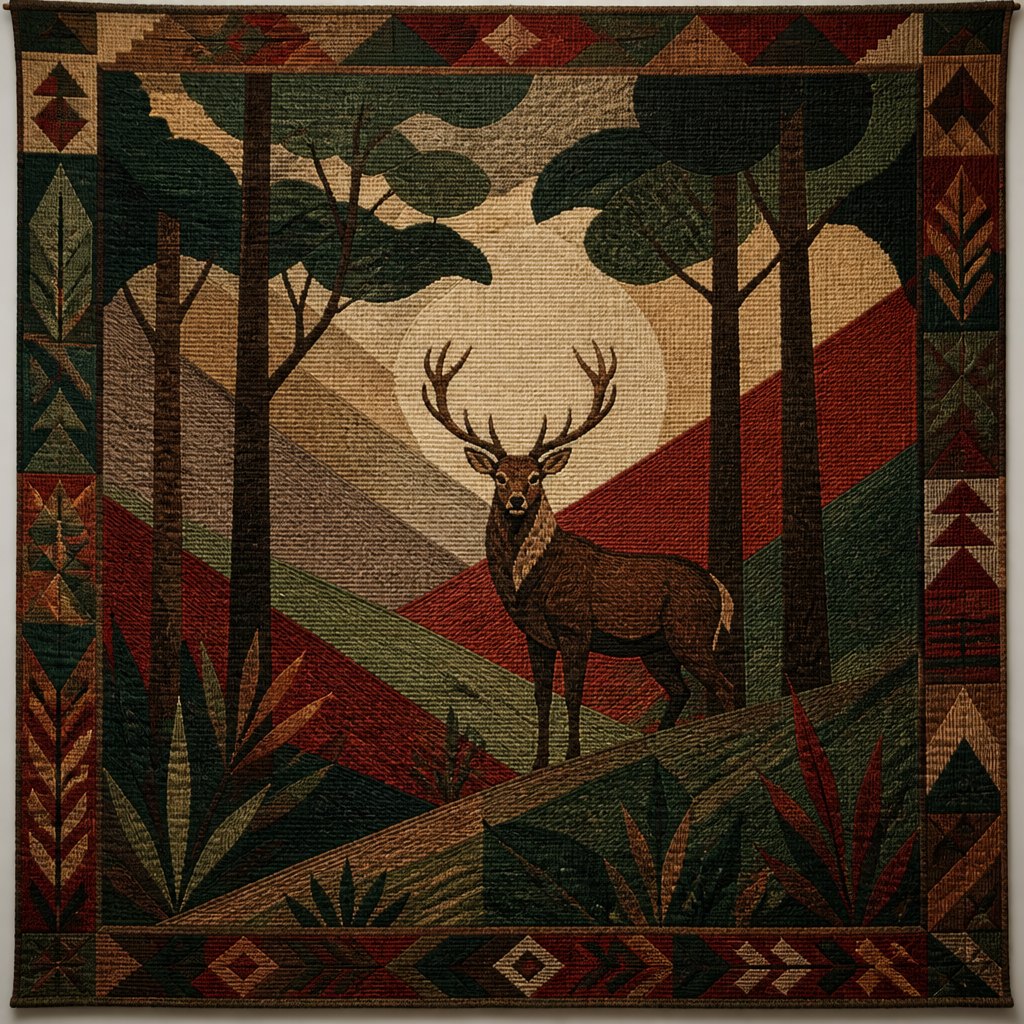
To suggest tapestry weaving in an AI image generator, describe the woven surface directly: 'horizontally ribbed weave texture,' 'matte woolen threads,' 'visible warp and weft structure,' or 'diagonal color-block joins.' Reference scale and format — 'large wall hanging,' 'wide decorative border' — to evoke the format's traditional use. Add 'dense wool tapestry weave' and 'no sheen, matte fiber surface' to keep the render from sliding toward smooth painted color. Close framing on the woven texture reads more convincingly than a distant view of a full hanging.
Frequently asked questions
What is tapestry weaving?
Tapestry weaving is a hand-weaving technique that builds pictorial images directly into cloth, interlacing colored weft threads across warp threads on a loom so the image and the fabric form together.
Is the Bayeux Tapestry actually a tapestry?
No — despite its name, the Bayeux Tapestry is embroidery, with wool thread stitched onto finished linen. True tapestry weaving forms the image within the weave structure itself, not on top of it.
Can I weave tapestry on a small loom?
Yes — a small frame loom is a common way to learn tapestry weaving basics like warping, packing rows, and joining colors before attempting large wall-hanging scale work.
How long does a tapestry take to weave?
It varies enormously with size and detail, but hand-woven tapestry is slow work — a small panel can take days, while historic large-scale hangings took workshops months or years.